AI Voice Agents For Healthcare: Complete Guide To Medicare Enrollment & Patient Engagement In 2026

Introduction
The healthcare industry is experiencing a technological revolution, and AI voice agents for healthcare are at the forefront of this transformation. These intelligent systems are fundamentally changing how Medicare organizations, health systems, and insurance providers engage with members, qualify leads, and manage enrollment processes. As we navigate through 2026, the adoption of AI voice technology has become essential for organizations seeking to maintain compliance while scaling operations during high-volume periods like the Annual Enrollment Period (AEP).
For Medicare call centers, FMOs, and marketing agencies, the pressure to deliver exceptional member experiences while adhering to strict HIPAA and CMS regulations has never been greater. Traditional call center models struggle with inconsistent quality, high operational costs, and limited scalability. AI voice agents for healthcare offer a solution that addresses these challenges head-on, providing 24/7 availability, perfect compliance adherence, and the ability to handle thousands of concurrent conversations without compromising quality.
This comprehensive guide explores how AI voice agents are transforming healthcare communications, from initial lead qualification through post-enrollment engagement, and why forward-thinking organizations are making the switch from traditional call center operations to AI-powered solutions.
Understanding AI Voice Agents in Healthcare Context
AI voice agents for healthcare represent a sophisticated application of conversational AI technology specifically designed to meet the unique requirements of the healthcare industry. Unlike generic chatbots or standard interactive voice response (IVR) systems, these agents leverage natural language processing, machine learning, and contextual understanding to conduct human-like conversations that feel natural and empathetic.
These intelligent systems can handle complex healthcare scenarios including benefit explanations, eligibility verification, appointment scheduling, and enrollment completion. They're built with compliance frameworks embedded at their core, ensuring every conversation adheres to HIPAA privacy requirements, TCPA consent regulations, and CMS marketing guidelines.
Key Components of Healthcare AI Voice Agents
Modern AI voice agents integrate several technological components to deliver seamless experiences:
- Natural Language Understanding (NLU): Interprets member intent even when questions are phrased conversationally or use healthcare-specific terminology
- Dynamic Conversation Flow: Adapts dialogue based on member responses, previous interactions, and available data
- Real-time Integration: Connects with CRM systems, eligibility databases, and enrollment platforms to provide accurate, personalized information
- Compliance Monitoring: Automatically tracks consent, maintains audit trails, and flags potential compliance concerns
- Sentiment Analysis: Detects member frustration or confusion and adjusts approach accordingly
The difference between standard automation and true AI voice agents for healthcare lies in their ability to handle exceptions, understand context, and deliver personalized experiences at scale. Organizations implementing these solutions report dramatic improvements in both operational efficiency and member satisfaction metrics.
Transforming Medicare Enrollment with AI Voice Technology
Medicare enrollment represents one of the most challenging operational periods for health plans and FMOs. The combination of regulatory complexity, time sensitivity, and high call volumes creates a perfect storm that traditional call centers struggle to navigate effectively. According to research from the Centers for Medicare & Medicaid Services, millions of Medicare beneficiaries make coverage decisions during AEP, creating unprecedented demand for enrollment support.
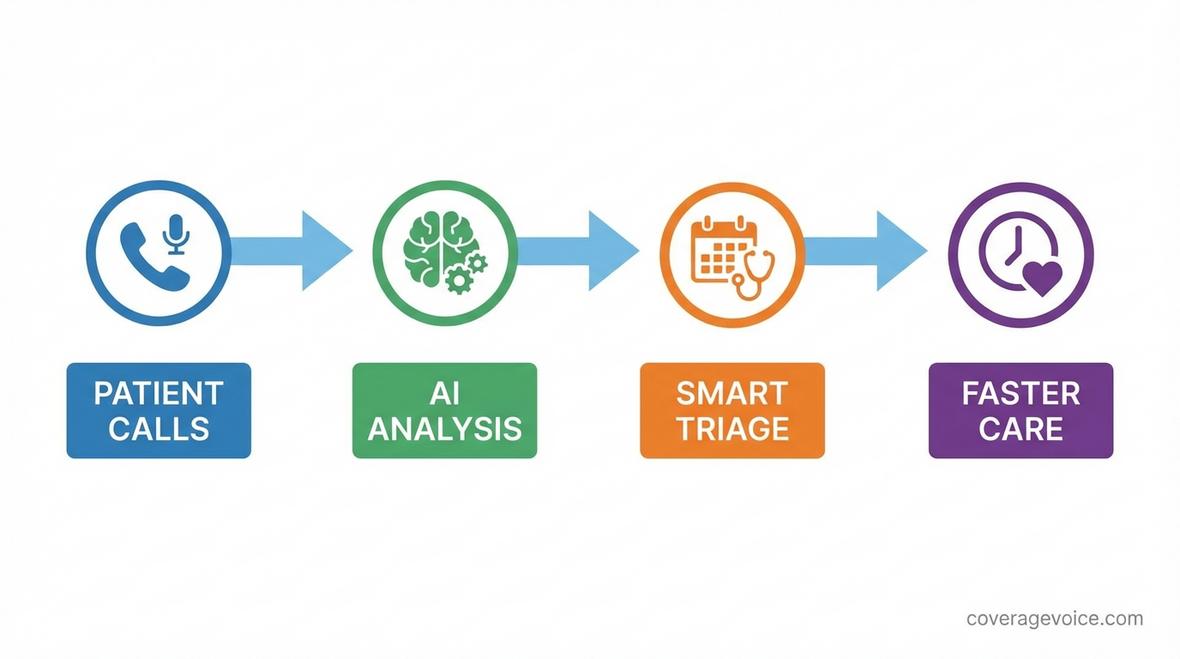
AI voice agents for healthcare are revolutionizing this process by automating the entire enrollment journey while maintaining the personal touch that Medicare beneficiaries expect. These systems can conduct initial outreach, qualify leads based on eligibility criteria, explain plan benefits in clear language, and even complete enrollment applications all without human intervention for straightforward cases.
Key Benefits for Enrollment Operations
Organizations implementing AI voice agents for Medicare enrollment consistently report transformative results:
- Scalability During Peak Periods: Handle 10x call volume during AEP without proportional cost increases
- Consistent Quality: Every conversation follows best practices and compliance requirements
- Faster Processing: Reduce enrollment completion time from days to minutes
- Higher Conversion Rates: Immediate response and follow-up dramatically improves lead-to-enrollment conversion
- Cost Reduction: Lower cost-per-enrollment compared to traditional call center operations
The enrollment automation capabilities of modern AI voice agents extend beyond simple form completion. They can verify eligibility in real-time, explain the implications of different plan choices, answer questions about coverage specifics, and even handle objections all while maintaining perfect documentation for compliance audits.
HIPAA and CMS Compliance in AI Voice Systems
Compliance concerns represent the primary barrier preventing many healthcare organizations from adopting AI voice technology. However, properly designed AI voice agents for healthcare actually enhance compliance rather than compromising it. These systems maintain perfect consistency in following regulatory requirements something human agents struggle to achieve across hundreds of daily interactions.
Every conversation is automatically recorded and transcribed, creating comprehensive audit trails that satisfy CMS documentation requirements. The systems can be programmed to never deviate from approved scripts for regulated disclosures, ensuring consistent delivery of required information. Additionally, consent management is built into the conversation flow, with explicit tracking of when and how permission was obtained for different types of communication.
HIPAA Privacy Safeguards
Modern AI voice platforms incorporate multiple layers of security to protect Protected Health Information (PHI):
- End-to-end encryption for all voice data and transcriptions
- Access controls limiting which team members can review conversations
- Automatic PHI redaction in logs and analytics
- Business Associate Agreement (BAA) coverage from the platform provider
- Regular security audits and penetration testing
Organizations concerned about compliance should look for AI voice platforms specifically designed for healthcare applications. Generic conversational AI tools typically lack the specialized compliance features required for Medicare operations. The Medicare marketing compliance capabilities built into purpose-designed platforms provide peace of mind that every interaction meets regulatory standards.
Implementing AI Voice Agents in Your Organization
Successfully deploying AI voice agents for healthcare requires careful planning and a phased approach. Organizations that rush implementation without proper preparation often encounter challenges that could have been avoided with structured rollout strategies.
Phase 1: Preparation and Strategy
Begin by identifying specific use cases where AI voice agents can deliver the most immediate value. Common starting points include:
- After-hours call handling to capture leads when human agents are unavailable
- Initial lead qualification to prioritize high-intent prospects
- Appointment confirmation and reminder calls
- Basic member service inquiries about plan benefits
Document your current processes, identify integration requirements with existing systems, and establish success metrics. Organizations implementing after-hour AI agents typically see immediate ROI as these capture opportunities that would otherwise be lost.
Phase 2: Pilot Program
Launch with a limited pilot program focused on a single use case. This controlled environment allows your team to:
- Test conversation flows and identify areas for optimization
- Train staff on monitoring and managing AI agent performance
- Validate compliance with all regulatory requirements
- Gather member feedback on the AI interaction experience
- Refine handoff protocols between AI agents and human staff
During the pilot phase, maintain close monitoring of all conversations. Most platforms provide real-time dashboards showing active calls, conversation outcomes, and performance metrics. Use this data to continuously improve the AI agent's effectiveness.
Phase 3: Scaled Deployment
Once the pilot demonstrates success, expand deployment across additional use cases and higher call volumes. Successful scaling requires:
- Comprehensive staff training on working alongside AI agents
- Clear escalation procedures for complex situations
- Ongoing conversation flow optimization based on performance data
- Integration with additional systems (CRM, enrollment platforms, etc.)
Organizations serving Medicare populations should consider specialized solutions designed specifically for this market. The Medicare call center solutions available from purpose-built platforms include pre-configured conversation flows, compliance frameworks, and integrations with common Medicare CRM systems.
Strategic Use Cases for AI Voice Agents
The versatility of AI voice agents for healthcare enables application across the entire member lifecycle, from initial lead contact through ongoing retention and engagement.
Lead Generation and Qualification
AI voice agents excel at high-volume lead qualification, instantly responding to inbound inquiries and conducting outbound follow-up on marketing campaigns. These systems can evaluate eligibility, assess member needs, determine plan fit, and schedule appointments with licensed agents all in a single conversation.
The speed advantage is substantial. While traditional call centers may take hours or days to contact new leads, AI agents respond instantly, dramatically improving conversion rates. Organizations implementing lead reactivation strategies with AI voice technology report recapturing opportunities that would have been lost with manual follow-up approaches.
Enrollment Support and Application Completion
Completing Medicare enrollment applications involves collecting extensive information while explaining complex benefit options. AI voice agents guide beneficiaries through this process step-by-step, answering questions as they arise and ensuring all required information is captured accurately.
These systems can conduct pre-screening to verify eligibility before investing time in full applications, reducing wasted effort on unqualified prospects. They can also handle the enrollment paperwork digitally, eliminating errors common with manual data entry.
Member Retention and Engagement
Retention challenges cost Medicare organizations significant revenue through member churn. AI voice agents support retention by maintaining regular contact with members, conducting satisfaction surveys, addressing concerns before they escalate, and identifying opportunities for additional services.
Automated new member welcome calls ensure every enrollee receives a consistent onboarding experience, establishing positive relationships from day one. Similarly, renewal reminders and plan review calls conducted by AI agents help maintain high retention rates without the cost of manual outreach.
24/7 Availability and Operational Efficiency
Healthcare questions don't respect business hours. Members need assistance evenings, weekends, and holidays when traditional call centers are closed or operating with reduced staff. AI voice agents for healthcare provide consistent service 24/7, ensuring no opportunity is missed and every member can get help when they need it.
This around-the-clock availability is particularly valuable during AEP when call volumes surge and every interaction represents enrollment opportunity. The AEP automation capabilities of AI voice agents allow organizations to handle peak volumes without the expense and complexity of temporary staff hiring.
Cost Analysis: AI Voice Agents vs. Traditional Call Centers
The financial case for AI voice agents for healthcare is compelling when examined across total cost of ownership. While platform subscription costs are visible, the true savings emerge from operational efficiencies, improved conversion rates, and elimination of variable labor costs.
Traditional Call Center Cost Structure
Medicare call centers typically incur costs including:
- Agent salaries and benefits (often $35,000-$50,000 annually per full-time equivalent)
- Training and onboarding expenses
- Management and quality assurance staff
- Physical infrastructure (office space, equipment, technology)
- Turnover and replacement costs (often exceeding 30% annually in call centers)
During peak periods like AEP, organizations face additional expenses hiring and training temporary staff who will only work for a few months. The ramp-up time for new agents means reduced productivity exactly when call volumes are highest.
AI Voice Agent Cost Model
AI voice platforms typically operate on a usage-based pricing model with costs determined by conversation volume and platform features. While specific pricing varies by provider, organizations generally pay a monthly platform fee plus per-conversation or per-minute usage charges.
The economic advantages become clear at scale. An AI voice agent can handle unlimited concurrent conversations, doesn't require training time, maintains consistent quality, and operates 24/7 without overtime pay. Organizations implementing these systems for Medicare brokers and FMOs typically report 40-60% cost reduction compared to traditional call center operations while simultaneously improving member satisfaction and conversion rates.
Measuring Success and ROI
Quantifying the impact of AI voice agents for healthcare requires tracking metrics across operational efficiency, member experience, and business outcomes.
Key Performance Indicators
Organizations should monitor:
- Operational Metrics: Call volume handled, average handle time, containment rate (percentage resolved without human transfer)
- Quality Metrics: Member satisfaction scores, conversation completion rates, compliance adherence
- Business Metrics: Lead-to-enrollment conversion rates, cost per acquisition, revenue per conversation
- Efficiency Metrics: After-hours call capture, response time to new leads, agent productivity improvement
Most AI voice platforms provide comprehensive analytics dashboards showing these metrics in real-time. Look for trends over time and compare performance against your baseline metrics from before AI implementation.
Calculating Return on Investment
ROI calculation should consider both direct cost savings and revenue improvements:
- Reduced staffing costs (fewer agents needed for same call volume)
- Eliminated overtime and temporary staff expenses during peak periods
- Increased conversion rates from faster lead response
- Revenue from after-hours leads that were previously missed
- Reduced member churn through proactive engagement
Organizations implementing comprehensive AI voice strategies across the member lifecycle typically achieve positive ROI within 3-6 months, with benefits accelerating as usage scales.
Future Trends in Healthcare AI Voice Technology
The evolution of AI voice agents for healthcare continues accelerating, with several emerging trends shaping the future of member engagement.
Advanced Personalization
Next-generation AI voice agents will leverage comprehensive member data to deliver hyper-personalized conversations. By analyzing previous interactions, health history, preferences, and behavioral patterns, these systems will anticipate needs and tailor recommendations before members even ask.
Multilingual and Cultural Competency
Healthcare organizations serving diverse populations need solutions that communicate effectively across languages and cultures. Advanced AI voice platforms now offer seamless multilingual conversations with cultural nuance built into conversation design, particularly important for dual-eligible and LIS outreach programs.
Predictive Member Engagement
AI systems are evolving beyond reactive response to proactive outreach based on predictive analytics. By identifying members at risk of disenrollment, medication non-adherence, or missed preventive care, AI voice agents can initiate timely interventions that improve outcomes and reduce costs.
Expanded Integration Ecosystem
The future involves seamless integration between AI voice agents and the broader healthcare technology stack, including electronic health records, care management platforms, and social determinants of health databases. This connectivity enables more informed conversations and coordinated care delivery.
Choosing the Right AI Voice Platform for Healthcare
Selecting an AI voice platform requires careful evaluation of several critical factors specific to healthcare operations.
Essential Evaluation Criteria
When assessing platforms, prioritize:
- Healthcare Specialization: Platforms built specifically for healthcare understand regulatory requirements and industry workflows
- Compliance Certifications: Verify HIPAA compliance, BAA availability, and SOC 2 certification
- Integration Capabilities: Seamless connection with your existing CRM, enrollment systems, and databases
- Conversation Quality: Natural-sounding voices, contextual understanding, and handling of complex scenarios
- Scalability: Ability to handle your peak call volumes without degradation
- Analytics and Reporting: Comprehensive data on performance and member interactions
Request demos that include your specific use cases and test the platform with real conversation scenarios. Many organizations find value in comparing specialized healthcare platforms against generic solutions. Resources like the Rivvi comparison help organizations understand the differences between various approaches to AI voice technology.
Frequently Asked Questions
Are AI voice agents truly HIPAA compliant?
Yes, when properly implemented. Purpose-built healthcare AI voice platforms incorporate HIPAA safeguards including encryption, access controls, audit logging, and Business Associate Agreements. However, generic conversational AI platforms may lack these essential protections, making healthcare-specific solutions critical for compliance.
How quickly can AI voice agents be deployed?
Implementation timelines vary based on complexity and integration requirements. Simple use cases like after-hours call handling can be deployed in 2-4 weeks, while comprehensive implementations across multiple use cases typically require 6-12 weeks for proper configuration, testing, and staff training.
Will members accept talking to AI agents?
Member acceptance is consistently high when AI voice agents are implemented thoughtfully. The key is ensuring natural conversation flow, providing easy escalation to human agents when needed, and maintaining transparency. Most platforms report member satisfaction scores for AI conversations equal to or exceeding human agent interactions.
Can AI voice agents handle complex Medicare questions?
Modern AI voice agents can handle a wide range of Medicare topics including plan benefits, eligibility requirements, enrollment processes, and general coverage questions. For highly complex scenarios requiring licensed agent expertise, AI systems seamlessly transfer to human specialists, providing context so members don't need to repeat information.
What happens if the AI doesn't understand a member?
Quality AI voice platforms include multiple fallback mechanisms. If the system doesn't understand a query after clarification attempts, it can offer alternative phrasing options, provide menu-based navigation, or transfer to a human agent. The goal is ensuring every member gets their question answered regardless of how it's phrased.
Conclusion
The adoption of AI voice agents for healthcare represents more than a technological upgrade it's a fundamental transformation in how Medicare organizations, health systems, and insurance providers engage with members. These intelligent systems deliver the scalability needed to handle peak enrollment periods, the consistency required for regulatory compliance, and the personalization that members expect.
As we progress through 2026, the organizations thriving in the competitive Medicare landscape are those that have embraced AI voice technology to enhance rather than replace human expertise. By automating routine interactions and qualification processes, these systems free licensed agents to focus on complex cases requiring their specialized knowledge.
For healthcare organizations evaluating their communication strategies, the question is no longer whether to implement AI voice agents, but how quickly they can deploy these solutions to capture the operational and competitive advantages they provide. The future of healthcare member engagement is conversational, intelligent, and available 24/7 and that future is already here.
Ready to Transform Your Medicare Enrollment Process?
See how Coverage Voice AI can help you automate Medicare enrollment.