David Graf Sunfire: The Complete Guide To Medicare Voice AI Automation And Intelligent Enrollment Solutions

Understanding David Graf Sunfire and the Evolution of Medicare Enrollment Technology
The Medicare insurance landscape has undergone dramatic transformation in recent years, driven by technological innovation and the increasing complexity of enrollment processes. Among the emerging solutions, david graf sunfire represents a concept that has garnered attention within Medicare operations circles, particularly as organizations seek advanced automation tools to handle the unprecedented growth in beneficiary enrollment. Medicare Advantage enrollment benchmarks show that enrollment grew by 4.5 million beneficiaries in 2023, reaching 33 million and representing 54% of eligible Medicare beneficiaries, highlighting the scale of AEP lead generation demands that solutions like david graf sunfire aim to address.
As Medicare call centers, Field Marketing Organizations (FMOs), and health plans face mounting pressure during Annual Enrollment Period (AEP) and Open Enrollment Period (OEP), the need for intelligent, HIPAA-compliant automation has never been more critical. This comprehensive guide explores how organizations are leveraging advanced voice AI technology to transform their enrollment operations, reduce costs, and improve member engagement while maintaining strict regulatory compliance.
The Current State of Medicare Operations: Why Traditional Approaches Are Failing
Medicare enrollment has become increasingly complex, with organizations facing multiple operational challenges that traditional call center models struggle to address effectively. The convergence of regulatory requirements, volume spikes during enrollment periods, and rising labor costs has created a perfect storm for Medicare brokers and FMOs.
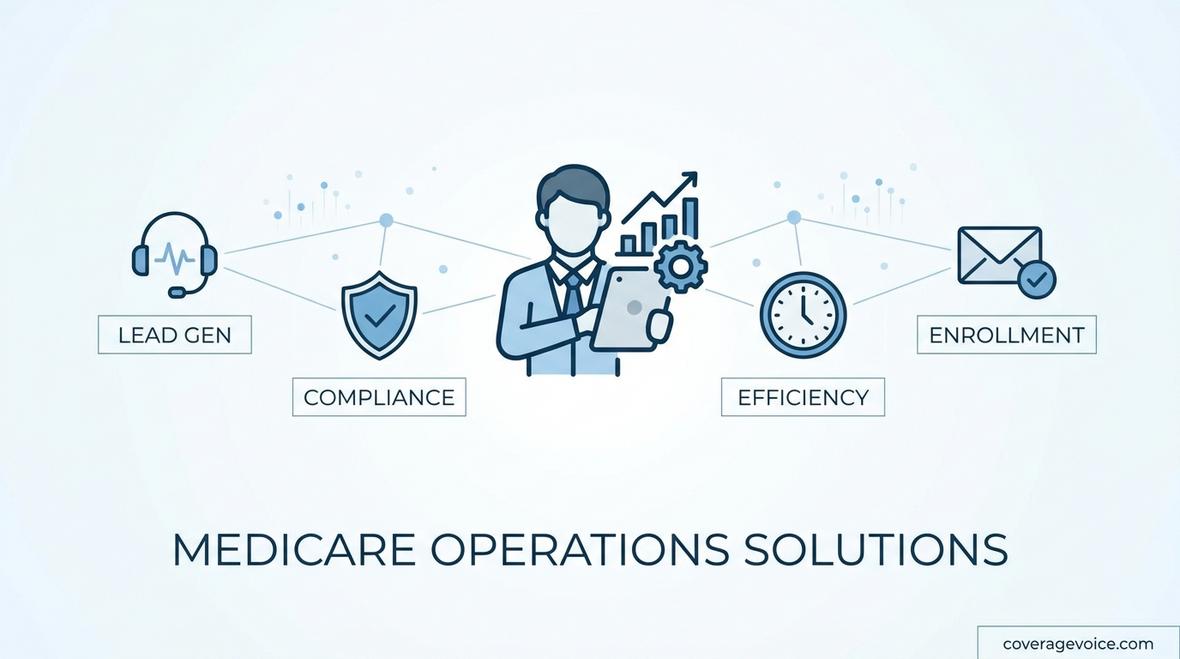
Volume and Scalability Challenges During Peak Enrollment
During AEP, which runs from October 15 through December 7, Medicare organizations experience call volume increases of 300-500% compared to non-enrollment periods. Traditional staffing models require organizations to hire and train temporary agents, often at costs exceeding $3,000 per agent when factoring in recruitment, training, and turnover. This seasonal staffing challenge creates significant operational inefficiencies and cost pressures that impact profitability and service quality.
Organizations exploring david graf sunfire and similar automation concepts are seeking solutions that can scale instantly without the delays and expenses associated with human agent onboarding. AEP and OEP automation solutions have emerged as critical tools for organizations looking to handle volume spikes while maintaining compliance and service quality standards.
Regulatory Compliance and CMS Requirements
Medicare marketing and enrollment operations face strict oversight from the Centers for Medicare & Medicaid Services (CMS), with comprehensive requirements covering everything from scope of appointment (SOA) documentation to TCPA compliance for outbound calling. Organizations must maintain detailed records of all beneficiary interactions, ensure proper disclosures are provided, and adhere to specific timelines for enrollment processing.
The complexity of these regulations has made manual compliance management increasingly untenable. A single compliance violation can result in fines ranging from $10,000 to $25,000 per incident, with severe violations potentially leading to loss of marketing privileges or plan sanctions. Solutions that incorporate Medicare marketing compliance features have become essential for organizations seeking to mitigate regulatory risk while maintaining operational efficiency.
How Voice AI Technology Is Transforming Medicare Enrollment
The emergence of conversational AI and voice automation has created new possibilities for Medicare operations, enabling organizations to deliver personalized, compliant interactions at scale. Understanding the capabilities and implementation considerations of these technologies is essential for organizations evaluating solutions in the context of david graf sunfire and related automation approaches.
Advanced Conversational AI Capabilities
Modern voice AI platforms leverage natural language processing (NLP) and machine learning to conduct human-like conversations with Medicare beneficiaries. These systems can understand complex questions, navigate multi-turn dialogues, and provide accurate information about plan options, benefits, and enrollment processes.
Unlike traditional Interactive Voice Response (IVR) systems that rely on rigid menu structures and touch-tone inputs, conversational AI platforms can handle open-ended questions and adapt responses based on context. This flexibility enables more natural interactions that improve beneficiary satisfaction while reducing call abandonment rates. Organizations implementing AI voice agents for healthcare have reported call handling improvements of 60-80% compared to traditional IVR systems.
Intelligent Lead Qualification and Pre-Screening
One of the most valuable applications of voice AI in Medicare operations is automated lead qualification and pre-screening. Voice AI agents can conduct initial eligibility assessments, gather demographic information, and identify beneficiary needs before routing qualified leads to licensed agents for enrollment completion.
This pre-screening capability dramatically improves agent productivity by ensuring they spend time only with qualified, ready-to-enroll beneficiaries. Organizations have reported increases in agent productivity of 200-300% when implementing intelligent pre-qualification systems, as agents can focus on enrollment completion rather than information gathering and qualification activities.
Key Implementation Considerations for Medicare Voice AI Solutions
Organizations evaluating voice AI solutions in the context of david graf sunfire and similar technologies must consider several critical factors to ensure successful implementation and ongoing operational success.
HIPAA Compliance and Data Security
Any technology handling Protected Health Information (PHI) must meet stringent HIPAA requirements for data security, privacy, and breach notification. Medicare voice AI platforms must implement end-to-end encryption, secure data storage, and comprehensive access controls to protect beneficiary information.
Organizations should verify that potential vendors have completed HIPAA compliance assessments, maintain Business Associate Agreements (BAAs), and implement appropriate technical safeguards. The importance of HIPAA-compliant AI voice automation cannot be overstated, as violations can result in penalties ranging from $100 to $50,000 per violation, with annual maximum penalties reaching $1.5 million per violation category.
System Integration and Technical Architecture
Effective Medicare voice AI implementation requires seamless integration with existing technology infrastructure, including Customer Relationship Management (CRM) systems, enrollment platforms, and compliance documentation tools. Organizations must evaluate integration capabilities carefully to ensure data flows smoothly between systems without creating manual handoffs or data silos.
The most successful implementations leverage API-based architectures that enable real-time data synchronization between voice AI platforms and core business systems. This integration ensures that beneficiary information, interaction history, and enrollment status remain current across all touchpoints. Organizations can explore available integration options to understand how voice AI platforms connect with their existing technology stack.
Cost-Benefit Analysis: Quantifying the ROI of Medicare Voice AI
Understanding the financial impact of voice AI implementation is critical for organizations considering solutions related to david graf sunfire and similar automation technologies. A comprehensive cost-benefit analysis should examine both direct cost savings and indirect value creation.
Direct Cost Savings from Agent Automation
The most immediate financial benefit of voice AI implementation comes from reduced labor costs. Traditional Medicare call center agents cost organizations between $35,000 and $55,000 annually when factoring in salary, benefits, training, and infrastructure. During AEP, temporary agent costs can reach $4,000-$5,000 per agent for a single enrollment season when including recruitment, training, and productivity ramp time.
Voice AI solutions can handle routine inquiries, appointment scheduling, and lead qualification at a fraction of these costs, with typical implementation costs ranging from $500 to $2,000 per month depending on call volume and feature requirements. Organizations implementing comprehensive Medicare call center solutions have reported cost reductions of 40-60% compared to traditional staffing models, with payback periods typically ranging from 3 to 6 months.
Improved Conversion Rates and Member Acquisition
Beyond direct cost savings, voice AI implementation often drives significant improvements in lead-to-enrollment conversion rates. By responding to inbound inquiries instantly, qualifying leads efficiently, and scheduling appointments at optimal times, voice AI systems reduce lead leakage and improve overall conversion performance.
Organizations have reported conversion rate improvements of 15-35% after implementing voice AI for initial contact and qualification, driven by faster response times, consistent messaging, and improved lead routing. For a Medicare FMO processing 10,000 leads during AEP with an average commission of $600 per enrollment, a 20% conversion improvement translates to $1.2 million in additional revenue, far exceeding the implementation and operational costs of voice AI solutions.
Strategic Use Cases for Medicare Voice AI Technology
Organizations exploring david graf sunfire concepts should understand the diverse applications of voice AI across the Medicare member lifecycle, from initial lead generation through post-enrollment member retention.
After-Hours and Weekend Coverage
Medicare beneficiaries often prefer to research plan options outside traditional business hours, creating a significant opportunity gap for organizations operating with standard Monday-Friday schedules. Voice AI enables 24/7 availability without the cost burden of night and weekend staffing.
Implementing after-hours AI agent capabilities allows organizations to capture leads that would otherwise be lost to competitors, schedule appointments for follow-up during business hours, and provide basic plan information to beneficiaries researching options during evenings and weekends. Organizations have reported that 30-40% of inbound inquiries occur outside standard business hours, representing substantial revenue opportunity.
Automated Appointment Scheduling and Confirmation
No-shows and last-minute cancellations represent significant productivity losses for Medicare sales organizations. Voice AI can automate appointment confirmation, send reminders, and handle rescheduling requests without agent involvement.
Comprehensive appointment scheduling automation reduces no-show rates by 40-60% through proactive outreach and convenient rescheduling options. For organizations conducting 1,000 appointments monthly with an average agent cost of $50 per appointment slot, reducing no-shows from 30% to 15% creates $7,500 in monthly value through improved agent utilization.
Dual-Eligible and LIS Beneficiary Outreach
Dual-eligible beneficiaries who qualify for both Medicare and Medicaid, as well as those eligible for Low Income Subsidy (LIS) programs, represent particularly valuable enrollment opportunities. However, these populations often face accessibility challenges and require specialized outreach approaches.
Voice AI enables scaled, personalized outreach to dual-eligible and LIS populations, providing information in multiple languages, accommodating accessibility needs, and guiding beneficiaries through complex eligibility and enrollment processes. Organizations focusing on these segments have reported enrollment increases of 25-40% when implementing dedicated voice AI outreach campaigns.
Leveraging Voice AI for Member Retention and Renewals
While much attention focuses on new member acquisition, retention represents an equally critical component of Medicare operations success. The concept of david graf sunfire extends beyond enrollment to encompass comprehensive member lifecycle management.
Proactive Retention and Satisfaction Monitoring
Medicare Advantage plans face annual churn rates averaging 10-15%, with each lost member representing not only lost commission revenue but also potential regulatory concerns if disenrollment rates become excessive. Voice AI enables proactive retention outreach to identify at-risk members and address concerns before disenrollment occurs.
Implementing member retention and renewal strategies through voice AI allows organizations to conduct regular satisfaction check-ins, address benefit questions, and identify utilization barriers at scale. Organizations have reported retention improvements of 3-5 percentage points through proactive voice AI outreach, translating to substantial lifetime value preservation.
New Member Welcome Calls and Onboarding
The first 90 days of membership represent a critical period for establishing member satisfaction and reducing early disenrollment. However, conducting personalized welcome calls at scale presents significant resource challenges for health plans and FMOs.
Voice AI can deliver consistent, personalized new member welcome calls that orient beneficiaries to their benefits, explain how to access care, and answer initial questions. This automated onboarding improves member satisfaction while ensuring 100% of new enrollees receive welcome outreach, compared to typical manual processes that reach only 40-60% of new members due to resource constraints.
Comparing Voice AI Solutions: What to Look for Beyond David Graf Sunfire
Organizations evaluating Medicare voice AI solutions should understand the competitive landscape and key differentiators that separate effective platforms from basic automation tools.
Essential Platform Capabilities and Features
Not all voice AI platforms offer equivalent capabilities for Medicare operations. Organizations should evaluate solutions based on several critical criteria: conversation quality and natural language understanding, HIPAA compliance and security architecture, CRM and enrollment platform integrations, compliance documentation and recording capabilities, multilingual support for diverse beneficiary populations, and real-time analytics and reporting functionality.
Organizations exploring alternatives should consider comprehensive platforms that address the full spectrum of Medicare operational needs, from lead generation through member retention. Evaluating platform comparisons can provide valuable insights into capability differences and implementation considerations.
Vendor Selection and Partnership Considerations
Selecting a voice AI vendor represents a strategic partnership decision that extends beyond technology capabilities. Organizations should evaluate vendors based on Medicare industry expertise, implementation support and training resources, ongoing optimization and performance management, compliance guidance and regulatory updates, and pricing transparency and contract flexibility.
The most successful implementations involve vendors who understand Medicare operations deeply and can provide strategic guidance beyond basic technology deployment. Organizations should prioritize vendors with proven Medicare experience and client references from similar organizations.
Implementation Roadmap: From Evaluation to Full Deployment
Successfully implementing voice AI solutions related to david graf sunfire concepts requires a structured approach that addresses technology, process, and organizational change management dimensions.
Phase 1: Pilot and Proof of Concept
Organizations should begin with a focused pilot implementation that addresses a specific use case with measurable success criteria. Common pilot scenarios include after-hours lead capture, appointment confirmation and reminders, or basic plan information inquiries. Pilots typically run for 30-60 days and should establish clear metrics for success, including call handling rates, beneficiary satisfaction scores, cost per interaction, and conversion or retention impact.
Phase 2: Expansion and Optimization
Following successful pilot completion, organizations should expand voice AI deployment to additional use cases and higher call volumes. This phase focuses on conversation optimization, integration refinement, and agent workflow adaptation to maximize the value of human-AI collaboration. Organizations typically spend 3-6 months in expansion phase, progressively increasing the percentage of interactions handled by voice AI while continuously monitoring quality and outcomes.
Phase 3: Full Deployment and Continuous Improvement
The final phase involves comprehensive deployment across all relevant use cases and ongoing optimization based on performance data and changing business requirements. Successful organizations treat voice AI as a continuously evolving capability rather than a one-time implementation, regularly reviewing conversation analytics, updating scripts and responses, and expanding to new use cases as opportunities emerge.
The Future of Medicare Automation: Trends Beyond David Graf Sunfire
The Medicare automation landscape continues to evolve rapidly, with emerging technologies and regulatory changes shaping the future of enrollment and member engagement operations.
Generative AI and Large Language Models
The emergence of advanced generative AI and large language models is enabling even more sophisticated conversational capabilities, with systems that can understand complex policy questions, provide personalized recommendations, and adapt to individual beneficiary communication preferences. These technologies promise to further blur the line between human and AI interactions while maintaining the compliance and consistency advantages of automation.
Omnichannel Integration and Unified Member Experience
Future Medicare automation will increasingly focus on unified omnichannel experiences that seamlessly integrate voice, text, email, and digital self-service channels. Beneficiaries will be able to start interactions in one channel and continue in another without losing context or repeating information, creating more convenient and satisfying experiences while improving organizational efficiency.
Frequently Asked Questions About Medicare Voice AI and David Graf Sunfire
What is david graf sunfire in the context of Medicare automation?
David graf sunfire represents a concept within Medicare operations circles related to advanced automation and voice AI technologies designed to streamline enrollment, improve member engagement, and reduce operational costs. Organizations exploring this concept are typically seeking sophisticated solutions that go beyond basic call center automation to deliver comprehensive operational transformation across the member lifecycle.
How much does Medicare voice AI implementation typically cost?
Medicare voice AI implementation costs vary based on call volume, feature requirements, and integration complexity. Entry-level implementations typically range from $500 to $2,000 monthly for basic lead qualification and appointment scheduling capabilities. More comprehensive implementations addressing multiple use cases across the member lifecycle may range from $3,000 to $10,000 monthly. However, these costs are typically offset by labor savings of 40-60% compared to traditional staffing models, with most organizations achieving positive ROI within 3-6 months of deployment.
Is voice AI compliant with CMS and HIPAA requirements?
Properly implemented voice AI solutions can fully comply with both CMS marketing and enrollment regulations and HIPAA privacy and security requirements. Organizations must ensure their chosen platform implements appropriate technical safeguards, maintains Business Associate Agreements, provides compliant call recording and documentation, and includes features for proper scope of appointment handling and disclosure delivery. Reputable Medicare voice AI vendors design their platforms specifically to address these regulatory requirements and provide compliance documentation and guidance to support organizational adherence.
Can voice AI completely replace human agents in Medicare operations?
Voice AI is best viewed as a complement to human agents rather than a complete replacement. AI excels at handling routine, high-volume interactions such as initial lead qualification, appointment scheduling, basic information requests, and proactive outreach campaigns. However, complex enrollment discussions, specialized plan comparisons, and situations requiring empathy and judgment are typically better handled by experienced human agents. The optimal approach combines AI automation for routine tasks with human expertise for complex, high-value interactions, improving both efficiency and member satisfaction.
How long does it take to implement Medicare voice AI solutions?
Implementation timelines vary based on scope, integration requirements, and organizational readiness. Basic implementations focusing on a single use case with minimal integration can be deployed in 2-4 weeks. More comprehensive implementations involving multiple use cases, CRM integration, and custom conversation design typically require 6-12 weeks from contract signing to initial deployment. Organizations should plan for an additional 2-3 months of optimization and expansion to achieve full operational value and scale to higher call volumes.
Conclusion
The concept of david graf sunfire encapsulates the broader transformation occurring in Medicare operations through advanced voice AI and automation technologies. As Medicare Advantage enrollment continues to grow and operational pressures intensify, organizations must adopt intelligent automation solutions that improve efficiency, reduce costs, and enhance member experiences while maintaining strict regulatory compliance. Voice AI represents a proven approach to addressing these challenges, with successful implementations delivering 40-60% cost reductions, 15-35% conversion improvements, and substantial member satisfaction gains. Organizations that strategically implement these technologies position themselves for sustainable competitive advantage in an increasingly complex and competitive Medicare marketplace. By carefully evaluating solutions, following structured implementation approaches, and continuously optimizing based on performance data, Medicare brokers, FMOs, and health plans can transform their operations and deliver superior value to the beneficiaries they serve.
Ready to Transform Your Medicare Enrollment Process?
See how Coverage Voice AI can help you automate Medicare enrollment.