Health Insurance Call Center Voice AI: Complete Guide To Intelligent Automation For Medicare Organizations

Introduction to Health Insurance Call Center Voice AI
Health insurance call center voice AI represents a transformative shift in how Medicare organizations, Field Marketing Organizations (FMOs), and health plans manage member engagement, enrollment, and operational efficiency. As the healthcare landscape evolves, traditional call center models face mounting pressure from rising labor costs, compliance requirements, and increasing member expectations. Voice AI technology addresses these challenges by delivering scalable, compliant, and cost-effective automation that enhances both member experience and organizational performance.
For managers and directors overseeing Medicare call centers, the integration of health insurance call center voice AI isn't just about technology adoption it's about strategic transformation. According to BLS customer service representative employment and wage data, labor costs continue to rise, making automation not just attractive but essential for maintaining competitive operations. This comprehensive guide explores how voice AI is reshaping the Medicare enrollment ecosystem and why forward-thinking organizations are embracing this technology to stay ahead.
Understanding Health Insurance Call Center Voice AI Technology
Health insurance call center voice AI leverages advanced natural language processing (NLP), machine learning, and conversational AI to handle inbound and outbound member interactions. Unlike traditional Interactive Voice Response (IVR) systems that rely on rigid menu structures, modern voice AI understands context, intent, and conversational nuance, creating human-like interactions that members actually appreciate.
Core Capabilities of Voice AI Systems
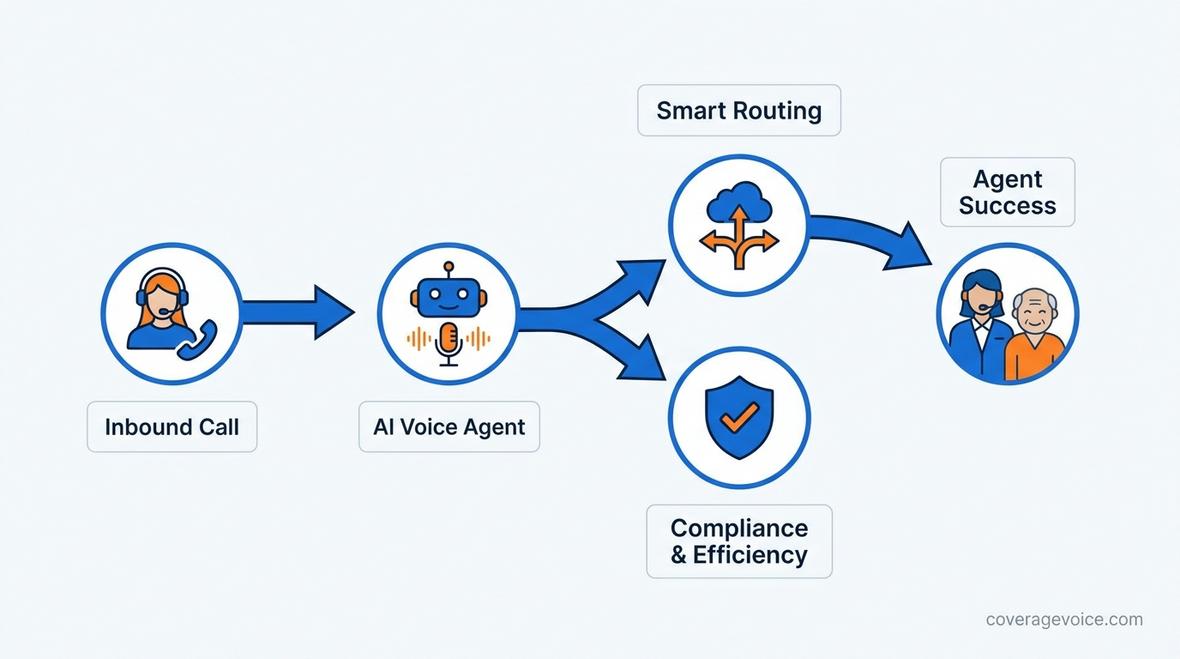
Modern health insurance call center voice AI platforms deliver several critical capabilities that transform operational performance. First, they provide intelligent call routing that analyzes caller intent, member data, and availability to connect individuals with the right resources instantly. This eliminates frustrating menu navigation and reduces wait times dramatically.
Second, these systems offer pre-screening and qualification capabilities that assess member eligibility, coverage needs, and enrollment readiness before escalating to human agents. This ensures that live agents spend time only with qualified prospects, dramatically improving conversion rates and agent productivity.
Third, voice AI enables 24/7 availability through after-hours AI agents that handle common inquiries, schedule appointments, and capture lead information even when your call center is closed. This is particularly valuable during high-volume periods like the Annual Enrollment Period (AEP) when call volumes can overwhelm traditional staffing models.
HIPAA and CMS Compliance in Voice AI
For Medicare organizations, compliance isn't optional it's foundational. Health insurance call center voice AI must adhere to strict HIPAA compliance standards and CMS marketing regulations. Leading platforms incorporate encryption, secure data handling, and audit trails that document every member interaction for regulatory review.
The NIST privacy engineering and data protection resources provide guidance on implementing privacy-preserving AI systems that minimize data exposure while maintaining operational effectiveness. Organizations must ensure their voice AI vendor demonstrates robust security certifications, regular compliance audits, and transparent data governance practices.
Additionally, TCPA compliance is critical for outbound calling operations. Voice AI systems must incorporate consent management, do-not-call list integration, and proper call timing restrictions to avoid costly violations and maintain member trust.
Business Impact: ROI and Operational Efficiency
The financial and operational benefits of health insurance call center voice AI are substantial and measurable. Organizations implementing voice AI report significant improvements across multiple performance dimensions that directly impact the bottom line.
Cost Reduction and Resource Optimization
Labor represents the largest operational expense for call centers. With BLS employment situation data for labor market context showing continued wage pressure, organizations face difficult choices between service quality and cost control. Voice AI resolves this dilemma by handling routine inquiries, qualification calls, and administrative tasks that previously required human agents.
Case studies demonstrate dramatic cost savings. One Medicare FMO documented in a case study showed how voice AI effectively replaced the workload of 45 agents during AEP, delivering over 60% cost reduction while maintaining service quality. These savings compound over time as voice AI systems require no overtime pay, benefits, or training costs associated with human staff.
Improved Conversion Rates and Lead Quality
Health insurance call center voice AI doesn't just reduce costs it improves revenue generation. By providing consistent, high-quality interactions and ensuring no lead goes uncontacted, voice AI systems increase conversion rates across the enrollment funnel. Intelligent lead qualification ensures that human agents receive only the most promising prospects, allowing them to focus on relationship-building and closing enrollments rather than sifting through unqualified inquiries.
Organizations report conversion rate improvements of 20-35% after implementing voice AI, driven by faster response times, better lead nurturing, and elimination of human error in follow-up processes. The technology also enables sophisticated lead reactivation campaigns that re-engage prospects who previously showed interest but didn't complete enrollment.
Scalability During Peak Periods
The Annual Enrollment Period creates operational chaos for many Medicare organizations. Call volumes can increase 300-500% within days, making it impossible to staff appropriately without massive seasonal hiring. Health insurance call center voice AI provides elastic scalability, handling unlimited concurrent calls without degradation in service quality.
This scalability extends beyond AEP to other critical periods like Open Enrollment Period (OEP) and Special Enrollment Periods triggered by qualifying life events. Organizations using AEP and OEP automation maintain consistent service levels year-round without the expense and complexity of variable staffing models.
Implementing Health Insurance Call Center Voice AI
Successful voice AI implementation requires thoughtful planning, clear objectives, and systematic execution. Organizations that approach deployment strategically achieve faster time-to-value and higher adoption rates among both staff and members.
Assessment and Planning Phase
Begin by conducting a comprehensive assessment of your current call center operations. Identify high-volume, repetitive interactions that are ideal candidates for automation. Common starting points include appointment scheduling, benefit verification, eligibility screening, and general inquiries about coverage options.
Define clear success metrics aligned with your organizational goals. These might include cost per enrollment, average handle time, first-call resolution rate, member satisfaction scores, and agent productivity metrics. Establishing baseline measurements before implementation enables accurate ROI calculation and demonstrates value to stakeholders.
Vendor Selection and Integration
Not all voice AI platforms are created equal, especially in the highly regulated Medicare space. Prioritize vendors with demonstrated expertise in healthcare, proven Medicare marketing compliance, and robust integration capabilities with your existing technology stack.
Evaluate platforms based on natural language understanding accuracy, customization flexibility, integration ecosystem, compliance certifications, and vendor support quality. Request demonstrations using your actual use cases and scripts to assess real-world performance. Organizations should also review comparison resources like vendor alternatives to understand differentiation and competitive positioning.
Deployment and Continuous Optimization
Start with a pilot deployment targeting a specific use case or call type. This allows your team to learn the technology, refine conversational flows, and identify optimization opportunities before full-scale rollout. Monitor performance metrics daily during the pilot phase and make rapid adjustments based on real member interactions.
Voice AI systems improve over time through machine learning, but this requires active management. Regularly review call recordings, analyze conversation transcripts, and identify patterns where the AI struggles or members express frustration. Use these insights to refine prompts, expand training data, and enhance conversational logic.
Key Use Cases for Medicare Organizations
Health insurance call center voice AI delivers value across the entire member lifecycle, from initial lead contact through enrollment, retention, and ongoing service. Understanding specific use cases helps organizations prioritize implementation and maximize return on investment.
Enrollment and Application Assistance
Voice AI streamlines the enrollment process by guiding members through application completion, verifying eligibility, explaining plan options, and collecting required information. This enrollment automation reduces administrative burden on agents while ensuring accuracy and compliance throughout the process.
For complex enrollments involving dual-eligible members or Low-Income Subsidy (LIS) programs, voice AI can handle specialized outreach that explains benefits, assesses eligibility, and facilitates enrollment in these critical programs that improve both member outcomes and plan performance.
Member Retention and Renewal Campaigns
Retaining existing members costs significantly less than acquiring new ones, yet many organizations struggle with proactive retention strategies. Voice AI enables systematic member retention and renewal campaigns that reach out to members before disenrollment risk factors emerge.
According to CMS Medicare Advantage performance data and enrollment benchmarks, member retention rates directly impact plan viability and performance ratings. Voice AI supports retention through proactive outreach, satisfaction surveys, benefit utilization reminders, and early identification of members considering plan changes.
Appointment Scheduling and Coordination
Scheduling appointments represents a high-volume, low-complexity task ideal for automation. Voice AI-powered appointment scheduling allows members to book, reschedule, or cancel appointments through natural conversation, with real-time calendar integration ensuring accuracy and eliminating double-bookings.
This capability extends beyond enrollment appointments to include welcome calls, annual wellness visits, and routine check-ins that support member engagement and plan performance on quality measures.
The Voice AI Technology Landscape
The health insurance call center voice AI market has matured significantly, with multiple vendors offering specialized solutions for Medicare and healthcare organizations. Understanding the competitive landscape helps organizations make informed vendor selections aligned with their specific needs.
Evaluating Voice AI Platforms
When evaluating platforms, consider both technical capabilities and industry expertise. Generic conversational AI platforms may offer impressive technology but lack understanding of Medicare regulations, enrollment workflows, and compliance requirements. Purpose-built solutions like CoverageVoice provide domain-specific functionality that accelerates implementation and reduces risk.
Key evaluation criteria include natural language understanding accuracy, voice quality and naturalness, integration capabilities with CRM and telephony systems, customization flexibility, compliance features, analytics and reporting, and total cost of ownership including implementation and ongoing management.
Future Trends in Health Insurance Call Center Voice AI
The health insurance call center voice AI landscape continues to evolve rapidly, with emerging capabilities that will further transform Medicare operations in coming years. Staying informed about these trends helps organizations plan strategic investments and maintain competitive advantage.
Predictive Analytics and Proactive Engagement
Next-generation voice AI systems will incorporate predictive analytics that identify member needs before they reach out. By analyzing enrollment history, utilization patterns, and engagement signals, these systems will trigger proactive outreach at optimal moments to address concerns, prevent disenrollment, and improve satisfaction.
Omnichannel Integration
Voice AI is expanding beyond phone calls to support omnichannel engagement that includes SMS, email, chat, and video. This allows members to interact through their preferred channels while maintaining conversation continuity and context across touchpoints.
Advanced Personalization
Future systems will deliver hyper-personalized interactions based on comprehensive member profiles, communication preferences, health conditions, and coverage needs. This personalization will improve engagement, increase trust, and drive better outcomes for both members and organizations.
Frequently Asked Questions
How much does health insurance call center voice AI cost?
Pricing varies based on call volume, feature requirements, and integration complexity. Most vendors offer usage-based pricing starting around $0.15-$0.50 per minute of conversation, with enterprise packages providing volume discounts. Organizations typically see positive ROI within 3-6 months of implementation through labor cost reduction and improved conversion rates.
How long does implementation take?
Implementation timelines range from 4-12 weeks depending on use case complexity and integration requirements. Simple use cases like appointment scheduling can be deployed in weeks, while comprehensive enrollment automation may require several months for proper configuration, testing, and optimization.
Will members accept voice AI interactions?
Member acceptance depends on implementation quality. Well-designed voice AI systems achieve satisfaction scores comparable to or exceeding human agents, particularly for routine transactions. The key is setting appropriate expectations, providing seamless escalation to human agents when needed, and maintaining natural, conversational interactions.
How do I ensure compliance with HIPAA and CMS regulations?
Choose vendors with healthcare-specific compliance certifications, including HIPAA and SOC 2. Implement proper consent management, secure data handling, and comprehensive audit trails. Regular compliance reviews and vendor audits ensure ongoing adherence to regulatory requirements.
Conclusion
Health insurance call center voice AI represents a fundamental shift in how Medicare organizations deliver member service, manage enrollment, and optimize operations. For managers and directors facing pressure to reduce costs while improving member experience, voice AI offers a proven solution that delivers measurable results. By automating routine interactions, enabling 24/7 availability, and providing scalable capacity during peak periods, voice AI allows organizations to focus human talent on high-value activities that require empathy, judgment, and relationship-building. As the technology continues to advance and member expectations evolve, early adopters of health insurance call center voice AI will maintain competitive advantage in an increasingly challenging marketplace.
Ready to Transform Your Medicare Enrollment Process?
See how Coverage Voice AI can help you automate Medicare enrollment.