Healthcare Call Center Solution: Complete 2026 Guide To Medicare Automation & Efficiency

The Evolution of Healthcare Call Center Solutions in 2026
The healthcare industry faces unprecedented challenges in managing patient communications, member enrollment, and regulatory compliance. A modern healthcare call center solution has evolved from simple phone answering services into sophisticated platforms that integrate artificial intelligence, automation, and compliance management. For Medicare organizations, FMOs, and health plans, selecting the right solution can mean the difference between operational chaos during Annual Enrollment Period (AEP) and streamlined, compliant member engagement.
Today's healthcare call center solutions must address multiple pain points simultaneously: managing high call volumes during peak enrollment periods, maintaining HIPAA and CMS compliance, reducing operational costs, and improving member satisfaction. According to a NLM Healthcare Call Center Efficiency Study, automation adoption correlates with a 30% reduction in agent burnout and a 25% improvement in lead qualification efficiency for health plans. These statistics underscore why healthcare organizations are rapidly adopting intelligent automation technologies.
This comprehensive guide explores what modern healthcare call center solutions offer, how they transform Medicare operations, and why technology-driven platforms like CoverageVoice are becoming essential infrastructure for enrollment success.
Core Components of a Modern Healthcare Call Center Solution
An effective healthcare call center solution encompasses multiple integrated technologies working together to streamline operations. Understanding these components helps organizations evaluate vendors and implementation strategies.
Inbound Communication Management
The foundation of any healthcare call center solution is its ability to handle incoming communications across multiple channels. Modern systems integrate voice calls, SMS, email, and web chat into unified workflows. For Medicare organizations, this means beneficiaries can reach out through their preferred communication method while agents access complete interaction histories regardless of channel.
Advanced solutions incorporate intelligent routing that directs calls based on caller demographics, language preferences, enrollment status, and even predictive analytics about likely needs. This ensures high-value leads reach experienced agents while routine inquiries can be handled through automation or junior staff.
Outbound Automation Capabilities
Outbound communication represents a critical component often overlooked in traditional call center evaluations. Medicare-focused outbound AI dialers enable organizations to conduct proactive member outreach for appointment reminders, enrollment follow-ups, and retention campaigns at scale.
The most effective healthcare call center solutions use AI-powered voice agents that can conduct natural conversations, answer common questions, and seamlessly transfer to human agents when needed. This hybrid approach maximizes contact rates while optimizing agent time for complex interactions that require human empathy and problem-solving.
Compliance and Security Infrastructure
No healthcare call center solution can succeed without robust compliance capabilities. HIPAA requirements mandate specific security protocols for Protected Health Information (PHI), while CMS regulations impose additional constraints on Medicare communications, including call recording retention, consent management, and Do Not Call list compliance.
Leading platforms integrate Medicare marketing compliance features directly into workflows, preventing non-compliant communications before they occur. This includes automated scope of appointment (SOA) scheduling, consent verification, and agent scripting that adheres to CMS guidelines.
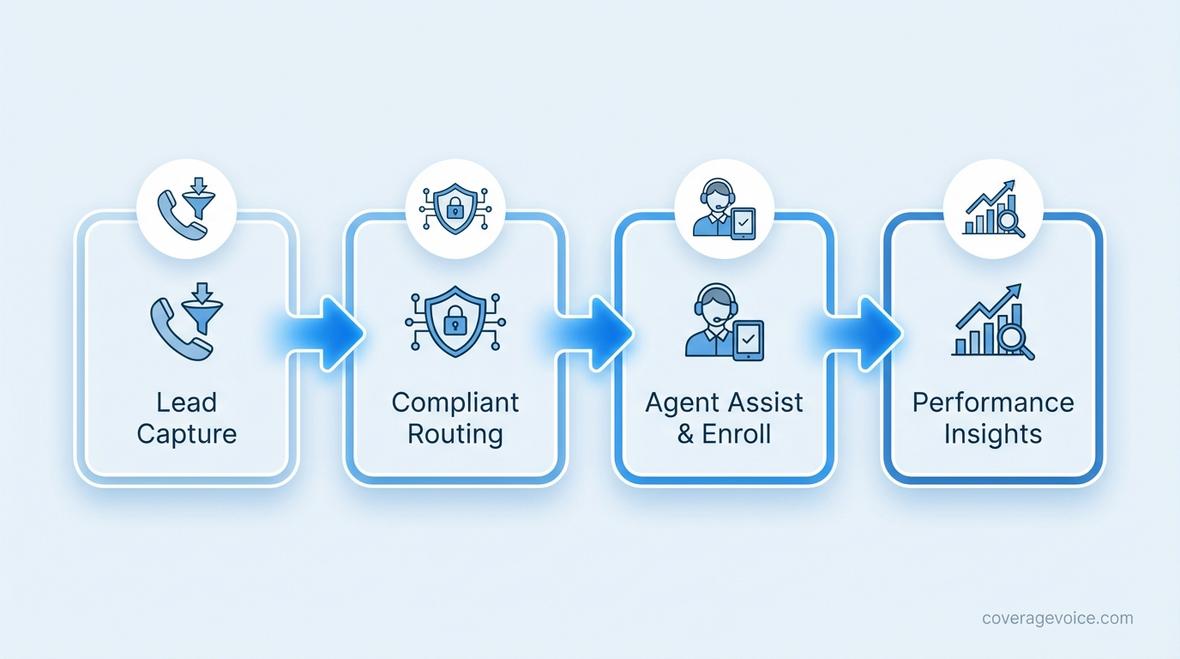
Key Benefits for Medicare Call Centers
Healthcare call center solutions deliver measurable improvements across operational, financial, and quality metrics. Understanding these benefits helps justify investment and set implementation priorities.
Operational Cost Reduction
Traditional Medicare call centers face significant staffing costs, particularly during AEP when call volumes can increase 300-400%. A modern healthcare call center solution reduces these costs through intelligent automation that handles routine inquiries, pre-screens leads, and schedules appointments without human intervention.
Organizations implementing AEP automation solutions report 40-60% reductions in per-contact costs while simultaneously improving response times and member satisfaction. The cost savings extend beyond direct labor to include reduced training expenses, lower turnover costs, and decreased infrastructure requirements.
Lead Conversion Enhancement
Speed-to-lead represents one of the most critical factors in Medicare enrollment success. Healthcare call center solutions with automated follow-up capabilities ensure every lead receives immediate contact, dramatically improving conversion rates compared to manual processes where leads may wait hours or days for follow-up.
Advanced solutions incorporate intelligent pre-screening that qualifies leads before agent contact, ensuring agents spend time only with prospects who meet eligibility criteria and demonstrate genuine interest. This optimization can double or triple agent productivity while improving the member experience.
Scalability and Flexibility
Traditional call centers struggle with seasonal demand fluctuations inherent to Medicare enrollment cycles. Cloud-based healthcare call center solutions offer elastic scalability that expands capacity during peak periods without requiring permanent staffing increases or infrastructure investments.
This flexibility extends to geographic distribution, enabling organizations to support remote agents, disaster recovery scenarios, and multi-site operations through unified platforms. For FMOs and marketing agencies serving multiple health plans, this translates to operational efficiency and competitive advantage.
Technology Integration and Automation
The most powerful healthcare call center solutions don't operate in isolation they integrate seamlessly with existing technology stacks to create unified workflows.
CRM and Lead Management Integration
Healthcare call center solutions must connect bidirectionally with customer relationship management systems to maintain accurate member records and enable sophisticated lead nurturing. Integration ensures call center interactions automatically update CRM records while giving agents real-time access to member history, preferences, and prior communications.
Organizations using integrated platforms report significant improvements in data accuracy, reduced duplicate records, and enhanced ability to track member journeys from initial inquiry through enrollment and retention.
AI Voice Agent Technology
Artificial intelligence has transformed what's possible in healthcare call centers. Modern AI voice agents conduct natural conversations that beneficiaries often can't distinguish from human agents, handling tasks like appointment scheduling, benefit explanations, and eligibility verification.
Unlike chatbots that require typed input, AI voice agents for healthcare work through phone calls the preferred communication channel for Medicare beneficiaries. These agents operate 24/7, eliminate hold times, and scale instantly to handle unlimited simultaneous conversations.
Analytics and Performance Monitoring
Effective healthcare call center solutions provide comprehensive analytics that enable continuous optimization. Key metrics include first-call resolution rates, average handle time, conversion rates by lead source, compliance violations, and agent performance indicators.
Advanced platforms offer predictive analytics that forecast call volumes, identify at-risk members before disenrollment, and recommend optimal contact strategies based on member characteristics and behavior patterns. This intelligence transforms reactive call centers into proactive member engagement engines.
Implementation Considerations for Healthcare Organizations
Successful implementation of a healthcare call center solution requires careful planning and stakeholder alignment. Organizations should consider several critical factors when evaluating options.
Build vs. Buy Decision Framework
Some organizations consider building custom call center solutions rather than purchasing commercial platforms. While this approach offers theoretical customization advantages, it typically requires substantially higher investment, longer implementation timelines, and ongoing maintenance costs.
For most Medicare organizations, purpose-built solutions like those designed specifically for Medicare call centers offer faster time-to-value, proven compliance frameworks, and continuous feature enhancement without internal development resources.
Vendor Evaluation Criteria
When evaluating healthcare call center solution providers, organizations should assess several key dimensions: Medicare-specific experience and compliance expertise, integration capabilities with existing systems, scalability to handle AEP volume spikes, reporting and analytics depth, and total cost of ownership including implementation and ongoing fees.
Organizations serving Medicare populations should prioritize vendors with demonstrated CMS compliance expertise and proven track records in similar deployments. References from comparable organizations provide valuable insights into implementation challenges and ongoing support quality.
Change Management and Training
Technology implementation succeeds or fails based on user adoption. Healthcare call center solutions require comprehensive change management that addresses agent concerns, provides adequate training, and demonstrates clear value to frontline staff.
Successful implementations include pilot programs that validate functionality with small agent groups before full deployment, comprehensive training that covers both system mechanics and compliance requirements, and ongoing coaching that reinforces best practices and addresses emerging challenges.
Compliance and Regulatory Considerations
Healthcare call center solutions operate within one of the most regulated industries. Understanding compliance requirements is essential for vendor selection and implementation success.
HIPAA Security Requirements
All healthcare call center solutions must comply with HIPAA Security Rule requirements for electronic Protected Health Information (ePHI). This includes encryption for data in transit and at rest, access controls that limit system access to authorized personnel, audit logs that track all PHI access, and business associate agreements with all vendors who access PHI.
Organizations should verify vendor security certifications, review security audit results, and understand incident response procedures before implementation. HIPAA-compliant AI voice automation requires specific architectural considerations beyond traditional call center security.
CMS Marketing and Communication Rules
Medicare organizations face additional regulatory requirements beyond HIPAA. CMS marketing rules govern when and how organizations can contact beneficiaries, what information can be discussed, and documentation requirements for all communications.
Healthcare call center solutions must enforce these rules through system controls rather than relying solely on agent compliance. This includes automated SOA scheduling before marketing appointments, consent verification before outbound calls, and call recording with appropriate retention policies.
TCPA and Consent Management
The Telephone Consumer Protection Act (TCPA) imposes strict requirements for outbound calling, particularly when using automated dialing systems. Healthcare call center solutions must maintain comprehensive consent records, honor opt-out requests immediately, and document all communications.
Organizations face significant liability for TCPA violations, making robust consent management non-negotiable. Leading platforms integrate TCPA compliance features that prevent non-compliant calling before it occurs.
Industry-Specific Applications
Healthcare call center solutions serve diverse organizations across the Medicare ecosystem, each with unique requirements and use cases.
FMOs and Marketing Agencies
Field Marketing Organizations face unique challenges managing high lead volumes from multiple sources while ensuring compliance across distributed agent networks. Healthcare call center solutions enable marketing agencies to centralize lead management, standardize compliance processes, and provide consistent member experiences regardless of which agent handles the interaction.
Advanced platforms offer white-label capabilities that allow FMOs to deliver call center services to downstream agents while maintaining centralized oversight and compliance monitoring.
Health Plans and Payers
Medicare Advantage plans use healthcare call center solutions for member services, enrollment support, and retention campaigns. The ability to handle both inbound member questions and proactive outreach through unified platforms streamlines operations and improves member satisfaction scores that impact Star Ratings.
Plans implementing comprehensive solutions report improvements in member retention, faster enrollment processing, and enhanced ability to support members throughout their healthcare journey.
ROI and Performance Measurement
Demonstrating return on investment from healthcare call center solutions requires tracking multiple metrics across operational efficiency, financial performance, and quality indicators.
Cost Metrics
Primary cost metrics include per-contact cost comparing automated vs. agent-handled interactions, total operational cost reduction from baseline, and cost avoidance from prevented compliance violations. Organizations should track these metrics monthly and compare against pre-implementation baselines.
Quality and Satisfaction Metrics
Member satisfaction scores, first-call resolution rates, and complaint volumes provide insight into solution effectiveness from the beneficiary perspective. Healthcare call center solutions should improve these metrics through reduced wait times, more consistent service quality, and enhanced agent effectiveness.
Business Outcome Metrics
Ultimate success metrics include enrollment conversion rates, member retention and lifetime value, and revenue per lead. These business outcomes demonstrate how operational improvements translate to organizational success.
Future Trends in Healthcare Call Center Solutions
The healthcare call center solution landscape continues evolving rapidly with emerging technologies and changing regulatory requirements shaping future capabilities.
Advanced AI and Natural Language Processing
Next-generation AI voice agents will conduct increasingly sophisticated conversations, handle complex benefit explanations, and provide personalized recommendations based on individual member needs and preferences. These advances will further shift the human agent role toward complex problem-solving and empathetic support.
Predictive Analytics and Proactive Engagement
Healthcare call center solutions increasingly incorporate predictive models that identify members likely to disenroll, beneficiaries who would benefit from specific supplemental benefits, and optimal contact timing for different member segments. This intelligence enables proactive engagement that improves outcomes and member satisfaction.
Omnichannel Expansion
While voice remains primary for Medicare communications, younger beneficiaries increasingly expect digital options. Healthcare call center solutions will expand omnichannel capabilities that seamlessly integrate voice, SMS, email, portal communications, and even video consultations into unified member experiences.
Frequently Asked Questions
What does a healthcare call center solution typically cost?
Healthcare call center solution costs vary based on features, call volumes, and deployment models. Cloud-based platforms typically charge per-user monthly fees ranging from $100-300 per agent seat, plus per-minute charges for AI voice agent usage. Enterprise implementations may involve significant setup fees but lower ongoing per-contact costs. Organizations should evaluate total cost of ownership including implementation, training, integration, and ongoing support rather than focusing solely on licensing fees.
How long does implementation typically take?
Implementation timelines vary based on complexity and organizational readiness. Basic deployments with minimal customization can launch within 4-6 weeks, while comprehensive implementations involving multiple integrations, custom workflows, and extensive agent training may require 3-6 months. Phased approaches that begin with core functionality and expand over time often provide fastest time-to-value while managing implementation risk.
How do healthcare call center solutions ensure compliance?
Leading platforms build compliance directly into system architecture through automated consent verification, scripting that enforces CMS guidelines, call recording with appropriate retention, Do Not Call list integration, and audit trails documenting all member interactions. Organizations should verify vendors maintain current CMS compliance expertise and update systems as regulations evolve.
Can healthcare call center solutions integrate with existing systems?
Modern platforms offer extensive integration capabilities through APIs, webhooks, and pre-built connectors for common CRM and marketing automation platforms. Integration depth varies by vendor, so organizations should verify specific integration requirements during evaluation. Critical integrations typically include CRM systems, lead distribution platforms, and compliance documentation systems.
Conclusion
Healthcare call center solutions have evolved into essential infrastructure for Medicare organizations navigating increasing regulatory complexity, rising operational costs, and heightened member expectations. The most effective platforms combine intelligent automation, robust compliance frameworks, and seamless integrations to transform call centers from cost centers into strategic assets that drive enrollment growth and member satisfaction. Organizations evaluating solutions should prioritize Medicare-specific expertise, proven compliance capabilities, and comprehensive analytics that enable continuous optimization. As AI technology advances and regulatory requirements evolve, partnering with purpose-built platforms like CoverageVoice positions healthcare organizations for sustained success in an increasingly competitive and regulated marketplace.
Ready to Transform Your Medicare Enrollment Process?
See how Coverage Voice AI can help you automate Medicare enrollment.