Healthcare Voice AI: Transforming Medicare Enrollment And Member Engagement

Introduction
The healthcare industry is experiencing a technological revolution, with healthcare voice AI emerging as a transformative force in patient engagement, administrative efficiency, and regulatory compliance. For Medicare insurance professionals managing marketing agencies, Field Marketing Organizations (FMOs), and health plan call centers, understanding and implementing voice AI solutions has become critical to maintaining competitive advantage during high-stakes periods like the Annual Enrollment Period (AEP).
This comprehensive guide explores how healthcare voice AI is reshaping the Medicare insurance landscape, delivering measurable improvements in lead conversion, operational costs, and member satisfaction while maintaining strict adherence to HIPAA and CMS compliance requirements.
What Is Healthcare Voice AI?
Healthcare voice AI represents the convergence of artificial intelligence, natural language processing, and voice recognition technologies specifically designed for healthcare applications. Unlike generic voice assistants, these systems are purpose-built to understand medical terminology, navigate complex insurance scenarios, and operate within stringent regulatory frameworks.
At its core, healthcare voice AI enables automated yet personalized interactions between health plans and members through voice-based channels. These systems can handle everything from initial lead qualification to enrollment support, claims inquiries, and ongoing member engagement all while maintaining compliance with federal healthcare regulations.
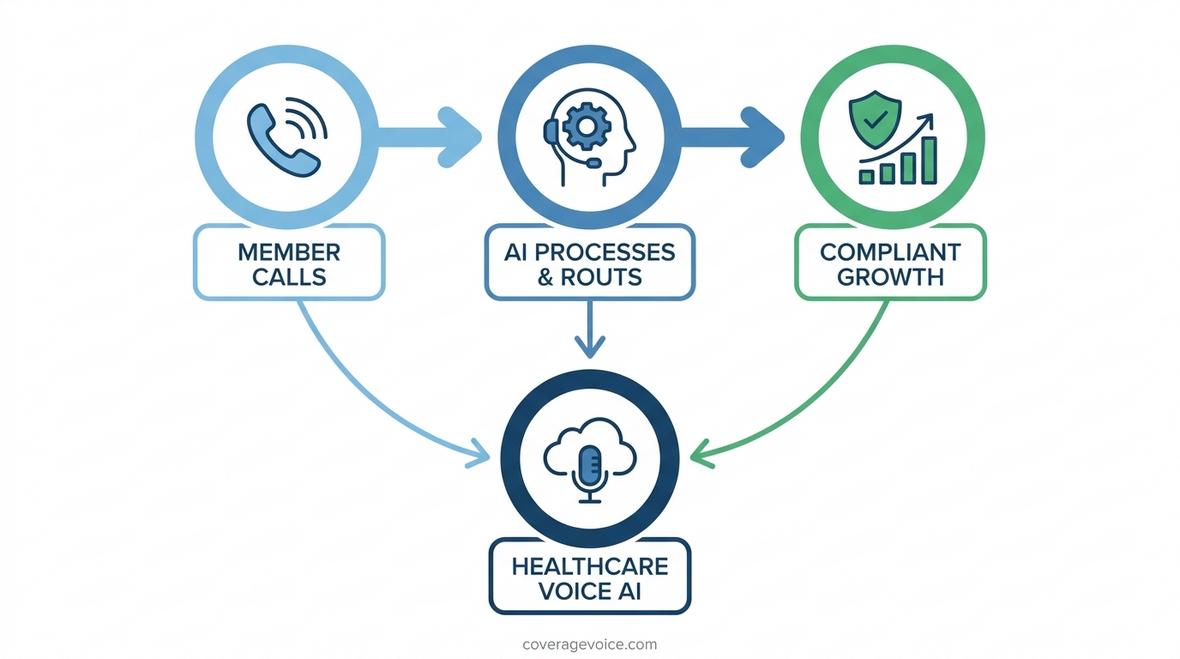
Key Components of Healthcare Voice AI Systems
Modern healthcare voice AI platforms integrate several sophisticated technologies:
- Natural Language Understanding (NLU): Interprets caller intent even when questions are phrased conversationally or use non-technical language
- Conversational AI: Maintains context throughout multi-turn dialogues, creating natural interactions
- Speech Recognition: Accurately transcribes diverse accents, speech patterns, and background noise conditions
- Integration Capabilities: Connects seamlessly with CRM systems, enrollment platforms, and compliance monitoring tools
- Compliance Engines: Built-in safeguards ensure all interactions meet HIPAA, TCPA, and CMS marketing guidelines
Addressing Medicare Industry Challenges with Voice AI
Medicare insurance organizations face unique operational challenges that healthcare voice AI is specifically designed to address. Understanding these pain points reveals why voice AI adoption has accelerated dramatically across the industry.
Managing AEP Call Volume Surges
The Annual Enrollment Period creates predictable yet overwhelming call volume spikes that strain traditional contact center resources. Medicare Advantage plans experience volume increases of 300-500% during AEP, making it financially impractical to staff for peak demand using human agents alone.
Healthcare voice AI addresses this challenge by providing elastic capacity that scales instantly to meet demand. AI agents can handle unlimited simultaneous conversations without degradation in service quality, eliminating hold times and ensuring every prospective member receives immediate attention during critical decision-making windows.
Navigating Compliance Complexity
CMS regulations governing Medicare marketing and enrollment create a compliance minefield for health plans. A single violation can result in sanctions, enrollment suspensions, or financial penalties that devastate annual growth targets.
Voice AI systems designed for healthcare include compliance as a foundational feature rather than an afterthought. Every interaction is automatically documented, compliant disclosures are delivered consistently, and scope of appointment protocols are enforced systematically. This compliance-first approach reduces risk while enabling growth.
Cost Pressure and ROI Requirements
With Medicare Advantage margins under increasing pressure, organizations must demonstrate clear return on investment for every technology expenditure. Traditional contact center operations carry substantial fixed costs in staffing, training, facilities, and ongoing management.
Voice AI agents improve healthcare scalability and cost-effectiveness, with research from IBM and Cleveland Clinic demonstrating significant potential savings through AI-powered routine monitoring and engagement tasks. Organizations implementing healthcare voice AI report cost reductions of 40-60% compared to traditional staffing models while simultaneously improving conversion rates.
Clinical and Operational Benefits Beyond Enrollment
While enrollment support represents the most visible application, healthcare voice AI delivers value across the entire member lifecycle, creating operational efficiencies that compound over time.
Reducing Administrative Burden on Clinical Staff
Generative AI voice agents reduce administrative burdens in healthcare, enabling nurses and supporting staff to focus on complex cases requiring human judgment. According to research published by the National Center for Biotechnology Information, AI voice agents facilitate patient interviews, support documentation, and enhance real-time clinical dialog, freeing clinicians from routine interactions that consume valuable time.
For Medicare Advantage plans with care management programs, this translates to more effective member outreach, improved health outcomes, and better Star Ratings performance all critical factors in plan competitiveness and CMS bonus payments.
Enhancing Member Engagement and Satisfaction
Member retention has become equally important as new enrollment in the competitive Medicare Advantage market. Healthcare voice AI enables proactive engagement strategies that were previously cost-prohibitive:
- Appointment Reminders: Automated yet personalized calls reduce no-show rates and improve preventive care completion
- Medication Adherence: Regular check-ins support members in following prescribed treatment plans
- Health Risk Assessments: Systematic outreach identifies members who would benefit from care management programs
- Benefits Education: Year-round communication ensures members understand and utilize available benefits
These engagement activities improve health outcomes, boost Star Ratings, and increase member lifetime value creating a virtuous cycle of quality improvement and financial performance.
Implementation Considerations for Medicare Organizations
Successfully deploying healthcare voice AI requires thoughtful planning and strategic alignment with organizational objectives. Organizations that approach implementation systematically achieve faster time-to-value and smoother adoption.
Compliance and Regulatory Requirements
Any voice AI solution deployed in the Medicare insurance context must address multiple regulatory frameworks simultaneously:
- HIPAA Compliance: Protected Health Information (PHI) must be encrypted in transit and at rest, with comprehensive audit trails
- CMS Marketing Guidelines: All member-facing communications must follow strict content and disclosure requirements
- TCPA Regulations: Outbound calling must respect consent requirements and do-not-call registries
- State Insurance Laws: Variable state-level requirements must be accommodated in multi-state operations
Organizations should prioritize HIPAA-compliant voice AI platforms that demonstrate Medicare-specific expertise and maintain current compliance certifications.
Integration with Existing Systems
Voice AI delivers maximum value when seamlessly integrated with existing technology infrastructure. Critical integration points include:
- CRM Systems: Bidirectional data flow ensures AI interactions inform agent workflows and vice versa
- Enrollment Platforms: Direct integration streamlines application processing and reduces manual data entry
- Analytics Tools: Consolidated reporting provides holistic visibility into member journey performance
- Quality Management: Automated interaction analysis identifies coaching opportunities and compliance gaps
Organizations should evaluate whether potential health plan call center solutions offer pre-built connectors for commonly used Medicare technology platforms.
Change Management and Agent Adoption
Successful healthcare voice AI implementations recognize that technology adoption is as much about people as platforms. Agents may initially view AI as a threat rather than a tool that elevates their role.
Effective change management strategies include:
- Transparent Communication: Clearly articulate how AI handles routine tasks while agents focus on complex, high-value interactions
- Comprehensive Training: Ensure agents understand how to work alongside AI systems and when to intervene
- Performance Metrics: Align incentives with desired outcomes rather than outdated metrics like handle time
- Continuous Feedback: Create channels for agents to report AI performance issues and suggest improvements
Real-World Use Cases in Medicare Insurance
Understanding specific applications helps organizations identify high-impact starting points for healthcare voice AI deployment.
Automated Lead Qualification and Routing
Not all leads represent equal opportunity. Healthcare voice AI can conduct initial qualification conversations that assess enrollment eligibility, coverage needs, and purchase timeline automatically routing qualified prospects to appropriate sales resources while nurturing others through automated follow-up sequences.
This intelligent routing maximizes agent productivity by ensuring they spend time with prospects most likely to convert, while AI handles the high-volume, lower-probability leads that would otherwise consume disproportionate resources.
Enrollment Assistance and Application Support
The Medicare enrollment process involves numerous steps, documentation requirements, and potential confusion points. Voice AI guides applicants through the process, answering questions, collecting required information, and identifying issues that require human intervention.
Organizations implementing Medicare FMO solutions report that AI-assisted enrollment reduces application abandonment rates while decreasing the time agents spend on routine application processing.
Member Retention and Disenrollment Prevention
Identifying at-risk members before they disenroll creates retention opportunities. Healthcare voice AI can conduct systematic satisfaction surveys, proactively address common frustration points, and escalate concerning feedback to retention specialists.
During the period when members can switch plans, proactive outreach reinforcing plan value and addressing concerns can prevent voluntary disenrollment protecting the substantial acquisition investment already made.
Star Ratings Improvement Initiatives
CMS Star Ratings directly impact plan revenue through bonus payments and marketing advantages. Many Star Ratings measures depend on member behaviors that voice AI can influence:
- CAHPS Survey Scores: Improved member experience through responsive, accessible support
- Clinical Quality Measures: Outreach campaigns promoting preventive screenings and care management participation
- Medication Adherence: Regular check-ins supporting members in following prescribed treatments
Organizations using AI-powered Medicare solutions can systematically address Star Ratings measures at scale, creating measurable quality improvements.
Measuring Success: Key Performance Indicators
Implementing healthcare voice AI without clear success metrics leaves organizations unable to demonstrate value or optimize performance. Establishing KPIs upfront ensures accountability and guides continuous improvement.
Operational Efficiency Metrics
- Cost Per Interaction: Total cost of AI-handled interactions compared to human agent baseline
- Containment Rate: Percentage of interactions successfully resolved by AI without agent transfer
- Average Handle Time: Duration of AI interactions versus human agent interactions
- Concurrent Capacity: Number of simultaneous interactions AI can manage during peak periods
Business Outcome Metrics
- Lead Conversion Rate: Percentage of AI-qualified leads that complete enrollment
- Cost Per Enrollment: Total acquisition cost including AI platform expenses
- Member Satisfaction Scores: CAHPS survey results and internal satisfaction measurements
- Retention Rate: Year-over-year member retention comparing AI-engaged versus non-engaged cohorts
Compliance and Quality Metrics
- Compliance Adherence Rate: Percentage of AI interactions meeting all regulatory requirements
- Disclosure Delivery Rate: Confirmation that required disclosures were provided in every applicable interaction
- Audit Findings: Number and severity of issues identified in quality monitoring reviews
Organizations should implement comprehensive AI voice analytics that provide visibility into these metrics through intuitive dashboards and automated reporting.
The Future of Healthcare Voice AI in Medicare
The healthcare voice AI landscape continues evolving rapidly, with emerging capabilities that will further transform Medicare insurance operations in coming years.
Advanced Multilingual Capabilities
Medicare's increasingly diverse beneficiary population requires support in multiple languages. Next-generation voice AI systems offer real-time translation and culturally appropriate communication in dozens of languages, expanding market reach while ensuring equitable access.
Emotional Intelligence and Empathy
Emerging AI systems incorporate emotional recognition that detects caller frustration, confusion, or distress adapting communication style accordingly or seamlessly transferring to human agents when emotional support is needed. This evolution addresses the primary limitation of early voice AI implementations.
Predictive Analytics and Proactive Engagement
By analyzing interaction patterns, claims data, and behavioral signals, healthcare voice AI will increasingly predict member needs before they arise initiating proactive outreach at optimal moments in the member journey. This shift from reactive to predictive engagement represents a fundamental evolution in member relationship management.
Integration with Care Delivery
The boundary between administrative support and clinical care continues blurring. Voice AI systems are beginning to support care coordination, medication management, and chronic condition monitoring creating seamless experiences that address members' holistic needs rather than artificial administrative boundaries.
Selecting a Healthcare Voice AI Vendor
The proliferation of voice AI vendors creates both opportunity and complexity. Organizations evaluating potential partners should assess several critical factors.
Medicare-Specific Expertise
Generic voice AI platforms lack the specialized knowledge required for Medicare applications. Prioritize vendors with demonstrated Medicare insurance experience, including understanding of CMS regulations, enrollment processes, and Star Ratings requirements. Solutions like CoverageVoice are purpose-built for the Medicare insurance ecosystem.
Compliance Infrastructure
Verify that potential vendors maintain current HIPAA compliance certifications, conduct regular security audits, and have documented processes for regulatory updates. Request evidence of compliance rather than accepting general assurances.
Scalability and Reliability
AEP and other high-volume periods demand systems that maintain performance under load. Evaluate vendors' infrastructure redundancy, disaster recovery capabilities, and track record during previous peak periods.
Implementation and Ongoing Support
Technology platforms require ongoing optimization, troubleshooting, and enhancement. Assess vendors' implementation methodology, training programs, and post-launch support models to ensure they align with your organization's capabilities and expectations.
Getting Started with Healthcare Voice AI
Organizations new to healthcare voice AI should adopt a phased approach that minimizes risk while building internal expertise and stakeholder confidence.
Phase 1: Pilot Program
Begin with a limited deployment focused on a specific use case such as appointment reminders or basic lead qualification. This contained scope allows the organization to validate technology performance, refine processes, and demonstrate value before broader rollout.
Phase 2: Optimization and Expansion
Based on pilot results, optimize AI conversation flows, integration points, and performance metrics. Gradually expand to additional use cases and higher-complexity interactions as confidence and capability grow.
Phase 3: Enterprise Deployment
With proven results and refined processes, scale voice AI across the organization integrating it into standard operating procedures and expanding to cover the full member lifecycle. At this stage, voice AI case studies from your own implementation become powerful tools for continued stakeholder support.
Frequently Asked Questions
Can healthcare voice AI truly understand complex Medicare questions?
Modern healthcare voice AI systems utilize advanced natural language processing that comprehends Medicare-specific terminology, multi-part questions, and conversational phrasing. While extremely complex scenarios may still require human expertise, AI successfully handles 70-80% of typical member inquiries without transfer.
How does voice AI maintain HIPAA compliance?
HIPAA-compliant voice AI platforms encrypt all data transmissions, maintain comprehensive audit logs, restrict data access based on role-based permissions, and undergo regular security assessments. These systems are specifically architected to meet healthcare's stringent privacy requirements from the ground up.
Will implementing voice AI eliminate the need for human agents?
No. Healthcare voice AI augments rather than replaces human agents. AI handles high-volume routine interactions, while agents focus on complex situations requiring judgment, empathy, and nuanced problem-solving. This division of labor improves both operational efficiency and member satisfaction.
What is the typical implementation timeline?
Implementation timelines vary based on scope and organizational complexity. Focused pilot programs can launch within 4-6 weeks, while comprehensive enterprise deployments typically require 3-6 months including integration, testing, training, and phased rollout.
How do members respond to AI interactions?
Member acceptance of voice AI depends heavily on implementation quality. When AI provides immediate assistance, natural conversations, and seamless handoffs when needed, satisfaction scores match or exceed traditional IVR systems. Transparency about AI usage and easy access to human agents when preferred ensures positive member experience.
Conclusion
Healthcare voice AI represents a fundamental shift in how Medicare insurance organizations engage with prospects and members. By automating routine interactions while maintaining regulatory compliance, these systems enable organizations to scale operations efficiently, improve member satisfaction, and achieve measurable business results. For Medicare professionals navigating intense competition and regulatory complexity, voice AI is no longer an experimental technology but an operational necessity. Organizations that strategically implement voice AI solutions position themselves for sustainable competitive advantage in an increasingly digital healthcare marketplace. The question is no longer whether to adopt healthcare voice AI, but how quickly your organization can implement it effectively.
Ready to Transform Your Medicare Enrollment Process?
See how Coverage Voice AI can help you automate Medicare enrollment.