HIPAA Compliant AI Voice Automation: The Complete Guide For Medicare Organizations In 2026
Introduction
In the rapidly evolving landscape of Medicare enrollment and member engagement, HIPAA compliant AI voice automation has emerged as a transformative technology for organizations handling sensitive health information. As Medicare call centers, FMOs, marketing agencies, and health plans face mounting pressure to scale operations during high-volume periods like the Annual Enrollment Period (AEP), the need for intelligent, compliant automation solutions has never been more critical. This comprehensive guide explores how HIPAA compliant AI voice automation is reshaping Medicare operations in 2026, delivering cost savings, improved conversion rates, and enhanced member experiences without compromising regulatory adherence.
The healthcare industry processes billions of protected health information (PHI) data points annually, making compliance non-negotiable. According to the U.S. Department of Health and Human Services, HIPAA violations can result in penalties ranging from $100 to $50,000 per violation, with annual maximums reaching $1.5 million per violation category. For Medicare organizations deploying AI voice automation, understanding the intersection of innovation and compliance is essential for sustainable growth and risk mitigation.
Understanding HIPAA Compliant AI Voice Automation
HIPAA compliant AI voice automation refers to conversational artificial intelligence systems designed specifically to handle protected health information while adhering to the strict privacy and security requirements outlined in the Health Insurance Portability and Accountability Act. Unlike generic voice AI solutions, HIPAA-compliant systems incorporate technical safeguards, administrative controls, and physical protections to ensure that every interaction involving PHI meets federal regulatory standards.
Core Components of Compliant Systems
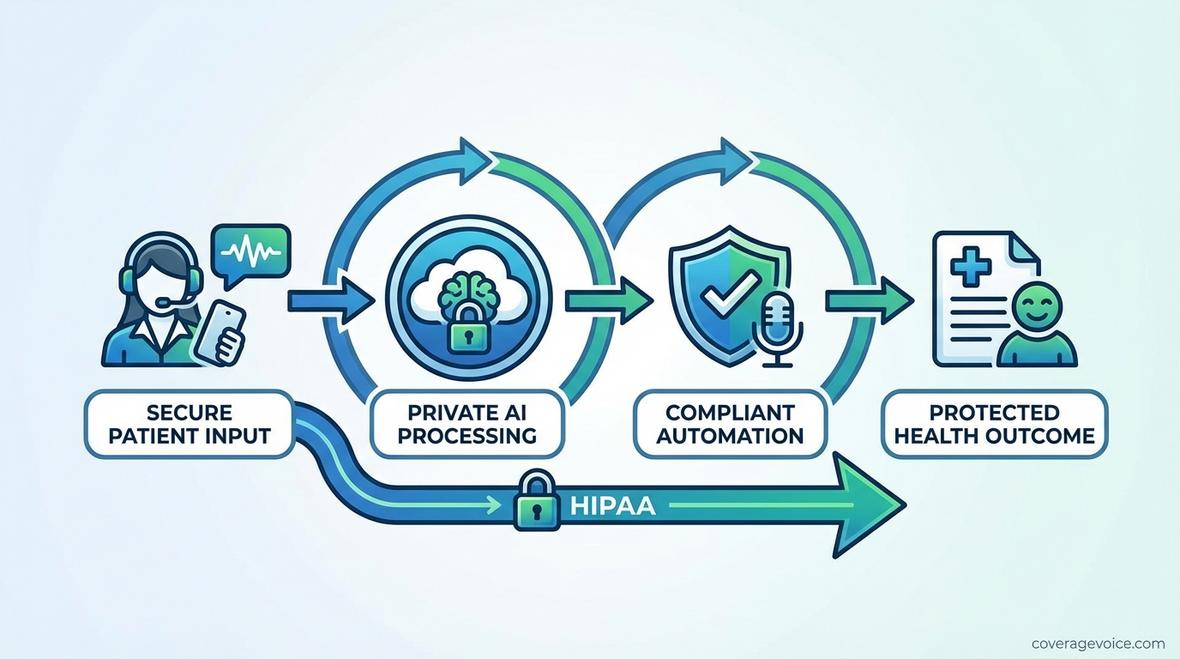
A truly HIPAA compliant AI voice automation platform integrates several critical components that distinguish it from standard voice AI solutions. These systems must implement end-to-end encryption for all voice data transmissions, ensuring that conversations containing PHI are protected both in transit and at rest. Access controls with role-based permissions prevent unauthorized personnel from accessing sensitive member information, while comprehensive audit logging tracks every interaction for compliance monitoring and potential breach investigation.
Business Associate Agreements (BAAs) represent another foundational element. Any technology vendor handling PHI on behalf of a covered entity must sign a BAA that legally binds them to HIPAA compliance standards. Organizations considering Medicare call center automation should verify that their AI voice automation provider offers signed BAAs as a standard part of their service agreement.
Technical Safeguards and Security Architecture
The technical architecture underlying HIPAA compliant AI voice automation platforms employs multiple layers of protection. Data encryption utilizes industry-standard protocols such as AES-256 for stored data and TLS 1.2 or higher for data in transit. Voice biometric authentication adds an additional security layer by verifying member identity before discussing sensitive health information.
Infrastructure design typically leverages HIPAA-compliant cloud environments with geographically distributed data centers that maintain redundancy and disaster recovery capabilities. These systems implement automatic session timeouts, secure credential management, and regular vulnerability assessments to identify and remediate potential security gaps before they can be exploited.
Regulatory Landscape and Compliance Requirements
Medicare organizations implementing voice AI automation must navigate a complex regulatory environment that extends beyond HIPAA to include CMS marketing and enrollment guidelines, TCPA requirements for outbound communications, and state-specific insurance regulations. Understanding these intersecting compliance frameworks is crucial for organizations seeking to deploy automation without regulatory risk.
HIPAA Privacy and Security Rules
The HIPAA Privacy Rule establishes national standards for protecting PHI, defining when and how covered entities can use or disclose health information. For AI voice automation systems handling Medicare enrollment conversations, this means implementing strict protocols around minimum necessary use, obtaining appropriate authorizations, and providing members with clear privacy notices explaining how their information will be used.
The Security Rule complements these privacy protections by requiring specific administrative, physical, and technical safeguards. Administrative safeguards include workforce training on HIPAA compliance, security risk assessments, and incident response procedures. Physical safeguards address facility access controls and workstation security, while technical safeguards focus on encryption, access controls, and audit mechanisms.
CMS Marketing and Enrollment Compliance
Beyond HIPAA requirements, Medicare organizations must ensure their HIPAA compliant AI voice automation systems adhere to CMS marketing and communications guidelines. These regulations govern how Medicare Advantage plans, Part D sponsors, and their agents can contact beneficiaries, what information must be disclosed during enrollment conversations, and how marketing materials must be approved before use.
The Centers for Medicare & Medicaid Services publishes annual updates to these guidelines through the Medicare Communications and Marketing Guidelines (MCMG) and Medicare Managed Care Manual. Organizations implementing Medicare marketing compliance solutions must ensure their AI systems are programmed with current regulatory language, scope of appointment procedures, and enrollment verification protocols.
Implementation Strategies for Medicare Organizations
Successfully deploying HIPAA compliant AI voice automation requires a strategic approach that balances technological capabilities with organizational readiness and regulatory compliance. Medicare organizations should follow a phased implementation methodology that minimizes risk while maximizing operational benefits.
Assessment and Planning Phase
The implementation journey begins with a comprehensive assessment of current operations, compliance posture, and automation opportunities. Organizations should conduct a gap analysis comparing their existing processes against HIPAA requirements, identifying areas where manual workflows create compliance vulnerabilities or operational inefficiencies.
This assessment phase should also include stakeholder interviews with compliance officers, IT security teams, call center managers, and enrollment specialists to understand pain points and success criteria. Defining clear use cases for automation helps focus implementation efforts on high-impact areas such as appointment scheduling, benefit verification, or enrollment status updates.
Vendor Selection and Due Diligence
Choosing the right HIPAA compliant AI voice automation platform requires rigorous vendor evaluation. Organizations should develop a comprehensive request for proposal (RFP) that addresses compliance certifications, security architecture, integration capabilities, and vendor track record in healthcare environments.
Key evaluation criteria include third-party security audits such as SOC 2 Type II attestations, HITRUST certification, and penetration testing results. Vendors should demonstrate their compliance expertise through case studies showing successful deployments in Medicare environments, such as documented examples of reducing agent workload while maintaining compliance.
Integration and Configuration
Technical integration represents a critical phase where the AI voice automation platform connects with existing systems such as CRM platforms, enrollment management systems, and telephony infrastructure. HIPAA-compliant integrations must maintain data security throughout the entire technology stack, implementing secure APIs with proper authentication and authorization mechanisms.
Configuration work includes training the AI models on Medicare-specific vocabulary, compliance scripts, and enrollment workflows. Organizations should work closely with their automation vendor to develop conversation flows that naturally incorporate required disclosures, scope of appointment confirmations, and enrollment verification steps while maintaining a positive member experience.
Use Cases and Applications Across the Medicare Ecosystem
HIPAA compliant AI voice automation delivers value across numerous Medicare operational scenarios, from initial lead qualification through post-enrollment member engagement. Understanding these applications helps organizations prioritize automation investments based on their specific operational challenges and strategic objectives.
Enrollment Period Automation
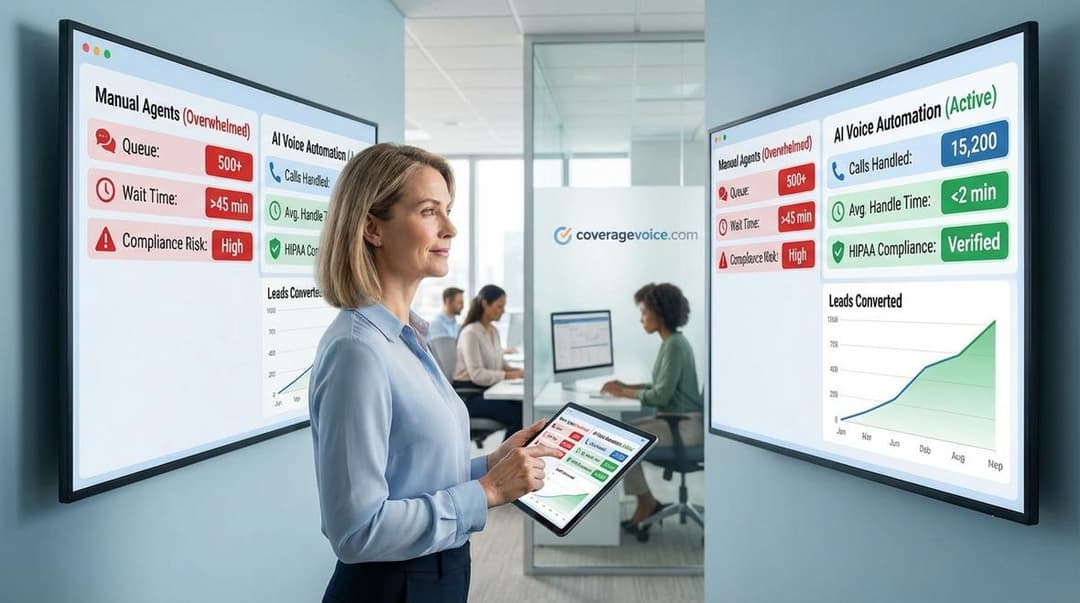
During the Annual Enrollment Period, Medicare organizations experience call volume surges that can overwhelm traditional call center capacity. HIPAA compliant AI voice automation systems can handle thousands of concurrent conversations, qualifying leads, answering frequently asked questions about plan benefits, and scheduling appointments with licensed agents for formal enrollment discussions.
Organizations implementing AEP automation report significant improvements in lead conversion rates and operational cost reduction. The AI handles routine inquiries about formulary coverage, provider networks, and premium costs, allowing human agents to focus on complex cases requiring personalized guidance or addressing unique member circumstances.
Member Retention and Engagement
Post-enrollment member engagement represents another high-value application for HIPAA compliant voice automation. Proactive outreach for wellness program enrollment, medication adherence reminders, and preventive care scheduling helps Medicare Advantage plans improve HEDIS scores and Star Ratings while enhancing member satisfaction and retention.
AI-powered systems can conduct periodic check-ins with members, identifying those experiencing challenges accessing care or understanding their benefits. Early identification of at-risk members enables timely intervention to prevent disenrollment, supporting member retention strategies that maximize lifetime value.
After-Hours Support and Accessibility
Traditional call centers operate within limited hours, forcing members to wait until the next business day for assistance with urgent questions. After-hours AI agents provide 24/7 availability for common inquiries, emergency pharmacy locator assistance, and appointment rescheduling, significantly improving member accessibility and satisfaction.
This continuous availability particularly benefits working-age Medicare beneficiaries who may struggle to contact their plan during standard business hours, as well as caregivers managing healthcare needs for elderly family members across different time zones.
Cost-Benefit Analysis and ROI Considerations
Medicare organizations evaluating HIPAA compliant AI voice automation must conduct thorough financial analysis comparing implementation costs against projected operational savings and revenue improvements. Understanding the complete economic picture helps justify investment and establish realistic performance expectations.
Direct Cost Reductions
Labor represents the largest operational expense for most Medicare call centers and enrollment teams. AI voice automation can reduce per-interaction costs by 60-80% compared to human agent handling, according to industry benchmarks from healthcare automation research. Organizations can redeploy rather than eliminate staff, moving agents from routine inquiry handling to higher-value activities like complex case resolution and personalized member counseling.
Infrastructure costs also decrease as cloud-based HIPAA compliant AI voice automation platforms eliminate the need for extensive on-premise telephony equipment and associated maintenance expenses. Scalability during peak enrollment periods occurs without proportional cost increases, as AI systems handle volume surges without requiring temporary staff hiring and training.
Revenue and Conversion Improvements
Beyond cost savings, HIPAA compliant AI voice automation drives revenue growth through improved lead conversion rates and faster speed-to-contact. AI systems can engage leads within seconds of inquiry, dramatically improving connection rates compared to manual callback processes that may take hours or days.
Organizations implementing comprehensive enrollment automation report conversion rate improvements of 20-35% due to consistent messaging, immediate response times, and intelligent lead routing to the most appropriate human agents when personal interaction becomes necessary.
Security Best Practices and Risk Mitigation
Maintaining HIPAA compliance requires ongoing vigilance and proactive security management. Organizations deploying AI voice automation must implement comprehensive security programs that address both technology vulnerabilities and human factors that could compromise PHI protection.
Access Control and Authentication
Robust access control mechanisms ensure that only authorized personnel can access PHI through the AI voice automation platform. Role-based access control (RBAC) assigns permissions based on job functions, preventing unnecessary PHI exposure. Multi-factor authentication adds an extra security layer for administrative access to system configurations and data repositories.
Regular access reviews verify that permissions remain appropriate as staff roles change or employees leave the organization. Automated deprovisioning processes immediately revoke access when employment terminates, reducing the window of potential unauthorized access.
Incident Response and Breach Management
Despite preventive measures, organizations must prepare for potential security incidents through comprehensive incident response planning. HIPAA requires covered entities to notify affected individuals, the Department of Health and Human Services, and in some cases the media, when breaches involving 500 or more individuals occur.
Effective incident response plans define clear escalation procedures, evidence preservation protocols, and communication templates for breach notification. Regular tabletop exercises test these plans, ensuring teams can execute coordinated responses under the stress of actual security incidents.
Future Trends and Emerging Capabilities
The field of HIPAA compliant AI voice automation continues evolving rapidly, with emerging capabilities promising even greater operational benefits and enhanced member experiences. Medicare organizations should monitor these trends to inform long-term technology roadmaps.
Advanced Natural Language Understanding
Next-generation AI voice systems demonstrate increasingly sophisticated natural language understanding, recognizing context, emotion, and intent with near-human accuracy. These advances enable more natural conversations that adapt to member communication preferences, health literacy levels, and emotional states.
Sentiment analysis capabilities detect member frustration or confusion, triggering automatic escalation to human agents before dissatisfaction impacts the member experience or enrollment decision. This emotional intelligence creates more empathetic interactions while maintaining the efficiency benefits of automation.
Predictive Analytics and Proactive Outreach
Integration of predictive analytics with HIPAA compliant AI voice automation enables proactive member outreach based on behavioral signals and health risk indicators. Systems can identify members likely to disenroll based on utilization patterns, triggering retention campaigns before members actively seek alternative coverage.
Similarly, predictive models identify members who would benefit from specific supplemental benefits or care management programs, enabling personalized outreach that improves health outcomes while strengthening plan differentiation and member loyalty.
Selecting the Right Platform for Your Organization
With numerous vendors offering AI voice automation solutions, Medicare organizations must carefully evaluate options to identify platforms that align with their specific operational requirements, compliance posture, and strategic objectives.
Medicare-Specific Expertise
Generic voice AI platforms lack the specialized knowledge required for Medicare environments. Organizations should prioritize vendors with demonstrated Medicare expertise, including pre-configured workflows for enrollment processes, built-in CMS compliance guardrails, and integration capabilities with Medicare-specific systems like HIPAA-compliant CRM platforms.
Vendor experience working with FMOs, Medicare Advantage plans, and marketing agencies provides valuable context for addressing industry-specific challenges and regulatory nuances that differentiate Medicare operations from other healthcare segments.
Scalability and Performance
Medicare organizations experience dramatic seasonal volume fluctuations, requiring automation platforms that scale seamlessly during AEP and OEP without performance degradation. Cloud-native architectures with elastic computing resources provide the necessary scalability while maintaining consistent response times and conversation quality.
Organizations should request performance guarantees covering metrics like average speed to answer, conversation completion rates, and system uptime, ensuring the platform can deliver reliable service during critical enrollment periods when system failures could result in significant revenue loss and member dissatisfaction.
Frequently Asked Questions
What makes voice AI automation HIPAA compliant?
HIPAA compliant AI voice automation incorporates end-to-end encryption, access controls, audit logging, Business Associate Agreements, and adherence to HIPAA Privacy and Security Rules. The platform must implement technical, administrative, and physical safeguards specifically designed to protect PHI throughout all interactions and data storage.
Can AI voice automation handle Medicare enrollment conversations?
Yes, properly configured HIPAA compliant AI voice automation systems can manage many enrollment-related conversations, including benefit explanations, plan comparisons, and appointment scheduling. However, licensed agents typically complete formal enrollment transactions to ensure compliance with CMS agent licensing requirements and provide personalized guidance for complex member situations.
How much cost savings can organizations expect from implementing voice AI?
Cost savings vary based on implementation scope and existing operational efficiency, but Medicare organizations typically achieve 60-80% reduction in per-interaction costs compared to human-only operations. Total savings depend on call volumes, use cases automated, and whether organizations redeploy rather than eliminate staff.
What integration capabilities are essential for Medicare operations?
Essential integrations include CRM systems for lead management, telephony platforms for inbound and outbound calling, calendar systems for appointment scheduling, and enrollment platforms for application processing. Organizations should also consider integration options with marketing automation tools and analytics platforms for comprehensive operational visibility.
How long does implementation typically take?
Implementation timelines range from 4-12 weeks depending on complexity, integration requirements, and customization needs. Organizations with well-defined processes and modern technology infrastructure can complete deployments more quickly, while those requiring extensive workflow redesign or legacy system integration may need longer implementation periods.
Conclusion
HIPAA compliant AI voice automation represents a transformative opportunity for Medicare organizations seeking to scale operations, reduce costs, and enhance member experiences while maintaining strict regulatory compliance. As enrollment periods become increasingly competitive and members expect seamless digital experiences, automation platforms that balance innovation with security will become essential operational infrastructure rather than optional enhancements. Organizations that strategically implement these technologies position themselves for sustainable growth, operational excellence, and improved member outcomes in an increasingly complex Medicare marketplace. By prioritizing compliance, selecting specialized vendors, and following implementation best practices outlined in this guide, Medicare call centers, FMOs, marketing agencies, and health plans can confidently embrace AI voice automation as a competitive advantage for 2026 and beyond.
Ready to Transform Your Medicare Enrollment Process?
See how Coverage Voice AI can help you automate Medicare enrollment.