Medicare Retention: Proven Strategies To Reduce Churn And Maximize Member Lifetime Value In 2026

Understanding Medicare Retention in Today's Competitive Landscape
Medicare retention has emerged as one of the most critical performance indicators for Medicare Advantage plans, Field Marketing Organizations (FMOs), and marketing agencies serving the healthcare sector. With Medicare Advantage enrollment surpassing 31 million beneficiaries and disenrollment rates climbing in certain market segments, organizations can no longer rely solely on acquisition strategies to drive growth. Member retention and renewal optimization directly impacts Star Ratings, revenue predictability, and long-term organizational sustainability.
The economics of Medicare retention are compelling. Acquiring a new Medicare beneficiary costs organizations between $300 and $800 per enrollment, depending on market density and lead quality. In contrast, retaining an existing member through proactive engagement costs significantly less typically under $50 per member annually when leveraging modern automation technologies. Research from Health Populi: Medicare Advantage Member Engagement and Retention Insights demonstrates that plans with retention rates above 90% consistently achieve higher Star Ratings and improved financial performance compared to competitors with higher churn.
For professionals managing call center operations, marketing campaigns, or member engagement programs, understanding the complete retention lifecycle from initial enrollment through annual renewal periods is essential to building sustainable competitive advantages in an increasingly crowded Medicare marketplace.
Key Challenges Driving Medicare Member Churn
Medicare retention challenges stem from multiple interconnected factors that organizations must address systematically. Understanding these root causes enables targeted intervention strategies that meaningfully reduce disenrollment rates.
Benefit Understanding and Expectation Misalignment
One of the primary drivers of Medicare member churn involves misalignment between member expectations and actual plan benefits. When beneficiaries enroll in Medicare Advantage plans without fully understanding coverage limitations, prescription drug formularies, or network restrictions, dissatisfaction emerges quickly. This confusion often peaks during the first 90 days of enrollment a critical window when members evaluate whether their plan selection meets their healthcare needs.
Organizations that implement new member welcome calls within 48 hours of enrollment report significantly lower early disenrollment rates. These proactive touchpoints clarify benefits, establish communication channels, and set realistic expectations that reduce future frustration.
Communication Gaps During Critical Periods
Medicare retention suffers when organizations fail to maintain consistent communication throughout the member lifecycle. Beneficiaries who receive sporadic or generic outreach are less likely to remain engaged with their health plan. Critical communication gaps typically occur during:
- The immediate post-enrollment period when members have the most questions
- Mid-year plan changes or formulary updates that affect coverage
- The Annual Enrollment Period (AEP) when competitive solicitations intensify
- After medical events or claims issues that create friction
Modern AEP and OEP automation solutions address these gaps by orchestrating multi-touch campaigns that maintain member engagement without overwhelming call center resources.
Operational Inefficiencies and Response Times
Slow response times to member inquiries directly correlate with increased disenrollment risk. When beneficiaries wait on hold for extended periods, receive inconsistent information across touchpoints, or struggle to resolve simple issues, their likelihood of switching plans during the next enrollment period increases substantially.
Organizations serving Medicare populations must balance operational efficiency with member experience quality. Medicare call center optimization through voice AI technology enables 24/7 availability while reducing average handle times and improving first-call resolution rates all critical factors in retention performance.
The Four-Pillar Medicare Retention Framework
Effective Medicare retention requires a structured approach that addresses member needs across the entire engagement lifecycle. This four-pillar framework provides organizations with a comprehensive roadmap for reducing churn and maximizing member lifetime value.
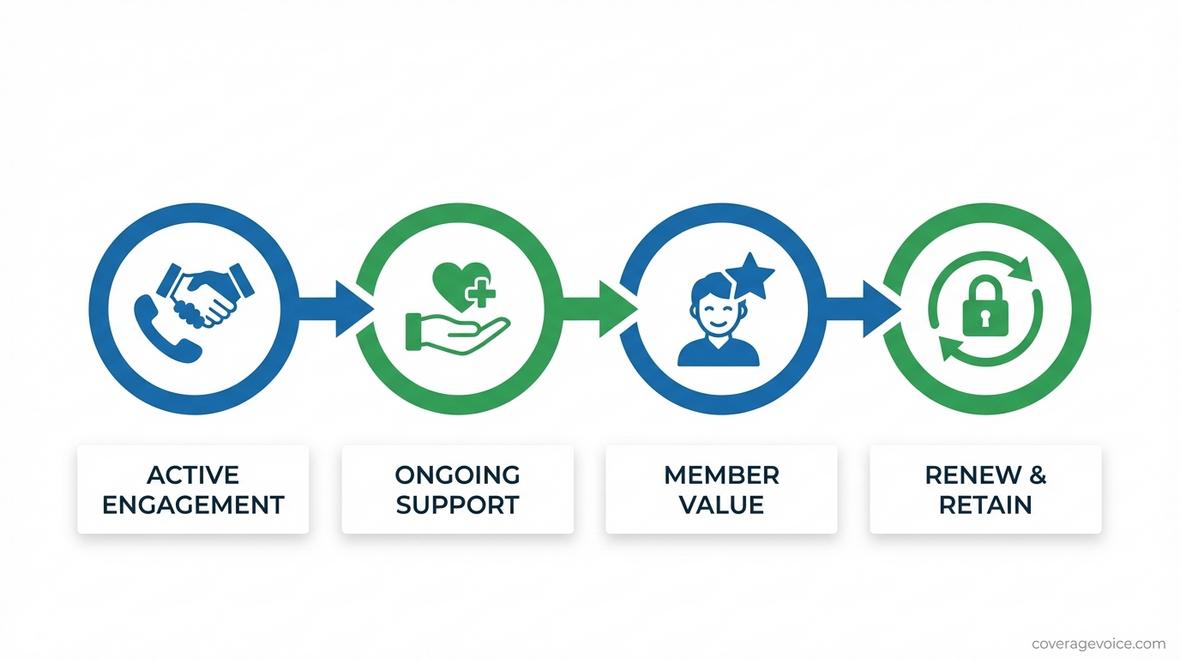
Pillar 1: Active Engagement Strategies
Active engagement forms the foundation of successful Medicare retention programs. Rather than waiting for members to contact the plan with problems, proactive organizations initiate regular touchpoints that demonstrate value and build relationship equity.
High-performing Medicare organizations implement systematic outreach programs that include:
- Welcome campaigns: Structured onboarding sequences that educate new members about benefits, provider networks, and available resources within the first 30 days
- Preventive care reminders: Automated notifications about annual wellness visits, cancer screenings, and other preventive services that improve health outcomes and Star Ratings
- Medication adherence support: Proactive outreach to members with chronic conditions to ensure prescription refills and address barriers to adherence
- Satisfaction surveys: Regular pulse checks that identify at-risk members before they decide to disenroll
Organizations leveraging outbound AI dialer technology can execute these engagement strategies at scale without proportionally increasing staffing costs. Voice AI systems handle routine outreach while escalating complex issues to human agents, optimizing both cost efficiency and member satisfaction.
Pillar 2: Ongoing Support Throughout the Member Journey
Medicare retention depends heavily on the quality and accessibility of member support services. Beneficiaries facing complex healthcare decisions need responsive assistance that addresses their specific circumstances without unnecessary friction.
Comprehensive support strategies include:
- Multi-channel accessibility: Offering support via phone, secure messaging, and omnichannel client intake systems that accommodate diverse member preferences
- After-hours availability: Implementing after-hour AI agents that handle routine inquiries outside standard business hours when many working-age beneficiaries need assistance
- Specialized support teams: Creating dedicated resources for high-complexity populations including dual-eligible beneficiaries who require coordination across Medicare and Medicaid benefits
- Proactive issue resolution: Monitoring claims processing, prior authorization requests, and pharmacy issues to resolve problems before members experience significant disruption
According to Healthcare Business Today: Medicare Plan Performance and Retention Metrics, Medicare Advantage plans with first-call resolution rates above 80% demonstrate retention rates 12-15 percentage points higher than plans with resolution rates below 60%. This correlation underscores the direct connection between operational excellence and member loyalty.
Pillar 3: Demonstrating Continuous Member Value
Medicare retention improves significantly when members clearly perceive the value they receive from their health plan. This perception extends beyond traditional healthcare benefits to encompass the entire member experience and the additional services that differentiate premium plans from basic coverage options.
Effective value demonstration strategies include:
- Benefit utilization education: Proactively informing members about underutilized benefits such as fitness programs, telehealth services, or transportation assistance
- Personalized health recommendations: Leveraging claims data to provide targeted suggestions for preventive care, specialist consultations, or wellness programs aligned with individual health profiles
- Cost transparency: Helping members understand their out-of-pocket expenses, compare pharmacy options, and maximize their benefit dollars
- Supplemental benefit communication: Regularly highlighting special benefits like dental, vision, or over-the-counter allowances that members may overlook
Organizations that implement voice AI for Medicare member retention can deliver personalized value messaging at scale, ensuring every member receives relevant communications that reinforce their plan selection decision throughout the year.
Pillar 4: Strategic Renewal and Retention Campaigns
The Annual Enrollment Period presents both the greatest opportunity and the highest risk for Medicare retention. During this seven-week window, beneficiaries evaluate alternatives and competitors aggressively solicit existing plan members. Organizations must execute sophisticated retention campaigns that reinforce value, address concerns, and secure renewals before members consider switching.
High-impact retention campaign elements include:
- Early renewal outreach: Contacting satisfied members before AEP begins to secure commitments and reduce exposure to competitive solicitations
- Risk-based segmentation: Identifying members with elevated disenrollment risk based on utilization patterns, satisfaction scores, or engagement levels, then deploying targeted retention interventions
- Competitive intelligence: Understanding local market dynamics and competitor positioning to address specific concerns that might prompt switching behavior
- Incentive strategies: Offering renewal bonuses, premium reductions, or enhanced benefits to high-risk members when regulations permit
Organizations implementing scalable AEP outreach with Medicare voice AI can contact their entire membership multiple times during the enrollment period while maintaining personalized messaging and responsive follow-up to member questions.
Technology Solutions Driving Medicare Retention Performance
Modern Medicare retention strategies depend increasingly on technology platforms that automate routine interactions, personalize member communications, and provide analytics that identify at-risk populations before disenrollment occurs.
Voice AI and Conversational Automation
Voice AI technology has transformed Medicare retention capabilities by enabling organizations to maintain high-frequency member contact without proportionally scaling human resources. Advanced voice AI platforms handle routine inquiries, appointment scheduling, benefit questions, and preventive care reminders while maintaining natural conversational flow and Medicare marketing compliance standards.
Key voice AI capabilities supporting Medicare retention include:
- Intelligent call routing: Directing members to appropriate resources based on intent recognition and historical interaction patterns
- Proactive outreach campaigns: Executing thousands of personalized calls daily for wellness reminders, renewal campaigns, or satisfaction surveys
- Real-time escalation: Seamlessly transferring complex issues to human agents when conversations exceed AI capabilities
- Multilingual support: Serving diverse beneficiary populations with native-language interactions that improve comprehension and satisfaction
Organizations implementing comprehensive voice AI solutions report 25-40% improvements in member contact rates and 15-20% reductions in disenrollment rates within the first year of deployment. These improvements translate directly to revenue retention and improved Star Rating performance.
Predictive Analytics and Risk Identification
Advanced analytics platforms enable Medicare organizations to identify members with elevated disenrollment risk weeks or months before they take action. By analyzing utilization patterns, engagement levels, claims experiences, and satisfaction indicators, predictive models generate risk scores that prioritize retention interventions toward the highest-value opportunities.
Effective predictive retention strategies include:
- Churn modeling: Machine learning algorithms that identify behavioral patterns associated with disenrollment
- Engagement scoring: Metrics that quantify member interaction levels and flag declining engagement trends
- Satisfaction monitoring: Continuous assessment of member sentiment through surveys, interaction quality, and resolution outcomes
- Intervention optimization: A/B testing of retention tactics to identify the most effective approaches for different member segments
Medicare Advantage plans leveraging predictive analytics for retention typically achieve 8-12 percentage point improvements in renewal rates compared to organizations using reactive retention approaches.
Omnichannel Engagement Platforms
Today's Medicare beneficiaries expect seamless experiences across communication channels. Organizations that provide consistent, coordinated interactions via phone, secure messaging, mobile apps, and web portals demonstrate higher retention rates than those with siloed channel strategies.
Comprehensive omnichannel capabilities include:
- Channel preference management: Allowing members to specify their preferred communication methods and honoring those preferences consistently
- Interaction history synchronization: Ensuring agents have complete context regardless of how members previously engaged
- Cross-channel campaign orchestration: Coordinating outreach across multiple touchpoints to reinforce messages without creating redundant contact
- Mobile-optimized experiences: Providing self-service capabilities that accommodate the growing segment of tech-savvy Medicare beneficiaries
Compliance Considerations in Medicare Retention Programs
Medicare retention strategies must navigate complex regulatory requirements governing member communications, marketing practices, and enrollment processes. Organizations that prioritize compliance while executing retention campaigns protect themselves from penalties while maintaining the trust that underpins long-term member relationships.
CMS Marketing and Communication Guidelines
The Centers for Medicare & Medicaid Services maintains strict guidelines for plan communications with current members. Retention campaigns must distinguish between permissible member services and prohibited marketing activities. Understanding these distinctions enables organizations to execute aggressive retention strategies without regulatory risk.
Key compliance considerations include:
- Scope of appointment requirements: Understanding when retention conversations trigger SOA documentation obligations
- Marketing material approval: Ensuring all retention campaign content receives proper CMS approval before deployment
- Prohibited inducement rules: Structuring retention incentives within regulatory boundaries
- Documentation requirements: Maintaining comprehensive records of member interactions and retention campaign activities
Organizations implementing TCPA-compliant Medicare voice AI benefit from built-in guardrails that ensure all automated interactions adhere to consent requirements and calling time restrictions.
Data Security and HIPAA Compliance
Medicare retention programs involve extensive member data including protected health information (PHI) that requires stringent security controls. Organizations must implement comprehensive data protection measures that satisfy HIPAA requirements while enabling the personalization necessary for effective retention strategies.
Essential security considerations include:
- Access controls: Limiting PHI access to authorized personnel with legitimate business purposes
- Encryption standards: Protecting member data in transit and at rest using industry-standard encryption protocols
- Audit trails: Maintaining comprehensive logs of data access and system interactions
- Vendor management: Ensuring third-party technology providers maintain appropriate business associate agreements and security certifications
Measuring Medicare Retention Success: Key Performance Indicators
Effective Medicare retention programs require rigorous measurement frameworks that track performance, identify improvement opportunities, and demonstrate return on investment. Organizations should monitor both leading indicators that predict future retention outcomes and lagging indicators that confirm program effectiveness.
Core Retention Metrics
Fundamental retention performance indicators include:
- Annual retention rate: The percentage of members who renew their coverage each year, typically calculated at the end of the Open Enrollment Period
- Voluntary disenrollment rate: The percentage of members who actively choose to leave the plan, excluding involuntary disenrollments due to eligibility changes
- First-year retention: The percentage of new enrollees who remain with the plan through their first renewal period a critical indicator of enrollment quality and onboarding effectiveness
- Lifetime value: The projected revenue a member generates throughout their relationship with the organization
Engagement and Experience Metrics
Leading indicators that predict retention outcomes include:
- Member contact rate: The percentage of the membership successfully reached through proactive outreach campaigns
- Engagement frequency: The average number of meaningful interactions per member annually
- Net Promoter Score (NPS): Member willingness to recommend the plan to others, strongly correlated with retention likelihood
- First-call resolution rate: The percentage of member inquiries resolved without requiring follow-up contacts
- Average handle time: The efficiency of member interactions balanced against quality and satisfaction
Financial Impact Metrics
Economic indicators that justify retention program investments include:
- Cost per retained member: Total retention program costs divided by the number of members who renew
- Retention ROI: The financial return generated by retention investments compared to the revenue preserved through reduced churn
- Comparative acquisition cost: The cost differential between retaining existing members versus acquiring new enrollees to replace those lost to disenrollment
Implementing a Comprehensive Medicare Retention Program
Organizations seeking to improve Medicare retention performance should follow a structured implementation approach that addresses people, processes, and technology in a coordinated fashion.
Phase 1: Current State Assessment
Begin by comprehensively evaluating existing retention performance, identifying root causes of disenrollment, and quantifying the financial impact of churn. This assessment should include:
- Analysis of historical retention rates by member segment, geography, and enrollment cohort
- Disenrollment surveys to understand why members leave and what might have retained them
- Process mapping of current member communication strategies and touchpoint frequency
- Technology inventory assessing current capabilities and gaps
Phase 2: Retention Strategy Development
Based on assessment findings, develop a comprehensive retention strategy that addresses identified gaps and leverages organizational strengths. Effective strategies typically include:
- Segmentation models that group members by retention risk, engagement preferences, and value potential
- Journey mapping that defines ideal member experiences across the lifecycle
- Campaign calendars that schedule retention touchpoints throughout the year
- Technology roadmaps that prioritize capability development based on impact and feasibility
Phase 3: Program Deployment and Optimization
Execute the retention strategy through phased implementation that allows for testing, learning, and refinement before full-scale deployment. Best practices include:
- Pilot programs targeting specific member segments or geographies to validate approaches
- A/B testing of messaging, timing, and channel strategies to optimize performance
- Agent training and change management to ensure human touchpoints align with automated interactions
- Continuous monitoring and adjustment based on performance data and member feedback
Frequently Asked Questions About Medicare Retention
What is considered a good Medicare retention rate?
High-performing Medicare Advantage plans typically maintain annual retention rates above 90%, with top-tier organizations achieving 93-95% retention. Plans with retention rates below 85% should consider their member experience and engagement strategies as areas requiring significant improvement. Retention rates vary by market maturity, with newer plans often experiencing higher churn as they refine their member experience and provider networks.
How much does Medicare member churn cost organizations?
The financial impact of Medicare member churn extends beyond the loss of premium revenue. Organizations must account for the initial acquisition cost ($300-$800 per member), lost lifetime value (averaging $15,000-$25,000 per member over a typical enrollment duration), and the cost of acquiring replacement members. Additionally, high churn rates negatively impact Star Ratings, potentially resulting in quality bonus payment reductions that compound financial losses.
What role does technology play in Medicare retention?
Technology platforms enable Medicare organizations to execute retention strategies at scale that would be economically prohibitive using traditional call center approaches. Voice AI, predictive analytics, and omnichannel engagement platforms allow organizations to maintain frequent, personalized contact with members while controlling operational costs. Organizations leveraging advanced retention technologies typically achieve 15-25% better retention outcomes compared to those relying solely on manual processes.
When should retention efforts begin in the member lifecycle?
Medicare retention begins at the moment of enrollment, not when disenrollment risk becomes apparent. The most effective retention programs implement systematic touchpoints throughout the member lifecycle, with particular emphasis on the first 90 days post-enrollment when satisfaction patterns form and during the 60 days preceding the Annual Enrollment Period when competitive pressures intensify. Organizations that maintain consistent engagement throughout the year achieve significantly higher retention rates than those that concentrate efforts exclusively during enrollment periods.
How can smaller Medicare organizations compete with large national plans on retention?
Smaller Medicare organizations can achieve competitive retention performance by leveraging technology that democratizes sophisticated engagement capabilities previously available only to large enterprises. Cloud-based voice AI platforms, predictive analytics tools, and automated campaign orchestration systems allow regional plans and FMOs to execute retention strategies comparable to national competitors while often delivering more personalized, locally-relevant member experiences. Organizations should focus on their unique value propositions such as local provider relationships, specialized populations, or superior service quality and ensure retention communications reinforce these differentiators.
Conclusion
Medicare retention represents one of the most significant value-creation opportunities for Medicare Advantage plans, FMOs, and marketing agencies serving this market. Organizations that implement comprehensive retention strategies combining proactive engagement, responsive support, continuous value demonstration, and strategic renewal campaigns consistently outperform competitors focused primarily on acquisition. The integration of voice AI technology, predictive analytics, and omnichannel engagement platforms enables scalable, personalized retention programs that balance operational efficiency with member experience quality. As the Medicare Advantage market continues evolving, retention excellence will increasingly differentiate successful organizations from those struggling with unsustainable churn rates and declining Star Rating performance.
Ready to Transform Your Medicare Enrollment Process?
See how Coverage Voice AI can help you automate Medicare enrollment.