Poly AI Alternative: Why CoverageVoice Is The Premier Choice For Medicare Organizations In 2026
Introduction
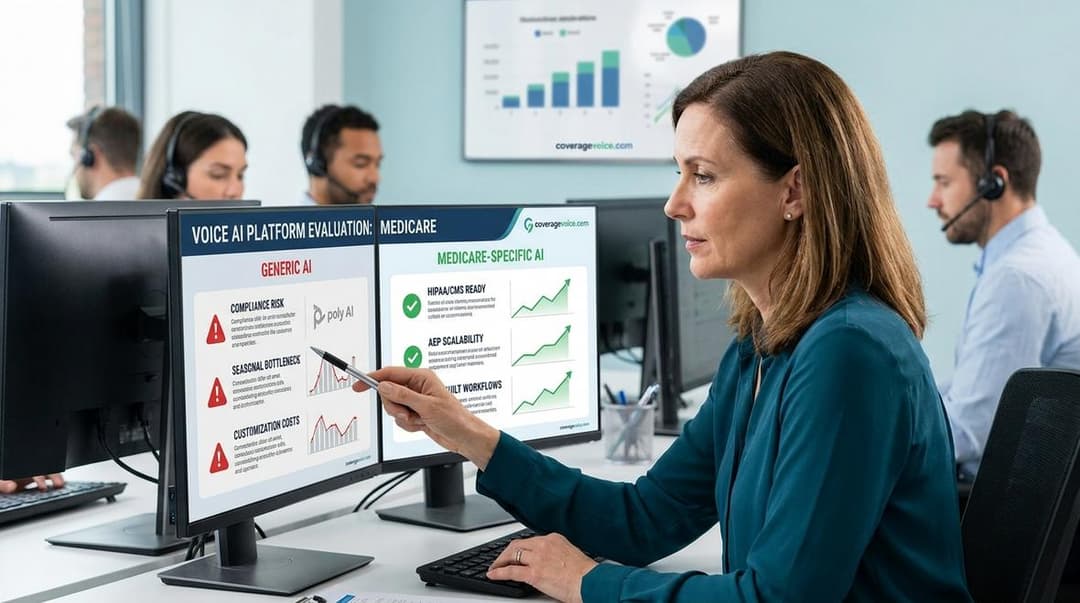
As conversational AI technology continues to reshape customer service and operational efficiency, Medicare organizations face a critical decision: selecting the right voice AI platform to handle enrollment, member engagement, and compliance requirements. While Poly AI has established itself as a recognizable player in the conversational AI space, Medicare-specific organizations including FMOs, health plans, call centers, and marketing agencies require specialized capabilities that generic platforms often lack.
The search for a poly ai alternative isn't simply about finding a cheaper option. It's about identifying a solution purpose-built for the unique demands of Medicare operations: HIPAA compliance, CMS regulatory adherence, seasonal surge capacity during AEP, and the nuanced communication requirements of beneficiary populations. This comprehensive guide examines why CoverageVoice has emerged as the leading poly ai alternative for Medicare organizations seeking intelligent automation without compromising compliance or member experience.
Understanding the Conversational AI Landscape for Healthcare
The conversational AI market has experienced explosive growth, with enterprise research from Forrester indicating that contact center automation and AI-driven customer service solutions are now mission-critical investments for organizations seeking competitive advantage. However, not all conversational AI platforms are created equal particularly when regulatory compliance and healthcare-specific workflows are involved.
Generic conversational AI platforms like Poly AI excel in retail, hospitality, and general customer service applications. These solutions offer impressive natural language processing capabilities and can handle high volumes of routine inquiries. However, Medicare organizations operate under fundamentally different constraints that demand specialized architectural considerations.
HIPAA and CMS Compliance Requirements
Medicare operations must adhere to strict HIPAA privacy rules and CMS marketing and communication guidelines. Every conversation involving protected health information (PHI) requires encrypted data transmission, secure storage, comprehensive audit trails, and consent management protocols. Generic AI platforms typically lack the healthcare-specific security frameworks necessary to meet these requirements out of the box.
CoverageVoice was architected from inception as a HIPAA-compliant voice automation platform, with built-in safeguards that ensure every conversation meets regulatory standards. This fundamental difference makes it a superior poly ai alternative for organizations that cannot afford compliance violations or the extensive customization required to retrofit generic platforms for healthcare use.
Medicare-Specific Workflow Integration
Medicare enrollment and member engagement involve highly specialized workflows: scope of appointment scheduling, plan comparison discussions, eligibility verification, formulary questions, and coordinated outreach for dual-eligible populations. These conversations require domain expertise that goes far beyond general customer service scripting.
While Poly AI requires extensive training data and custom development to handle these Medicare-specific scenarios, CoverageVoice includes pre-built conversation flows designed specifically for Medicare call center operations, enrollment automation, and member retention use cases.
Why Medicare Organizations Seek Poly AI Alternatives
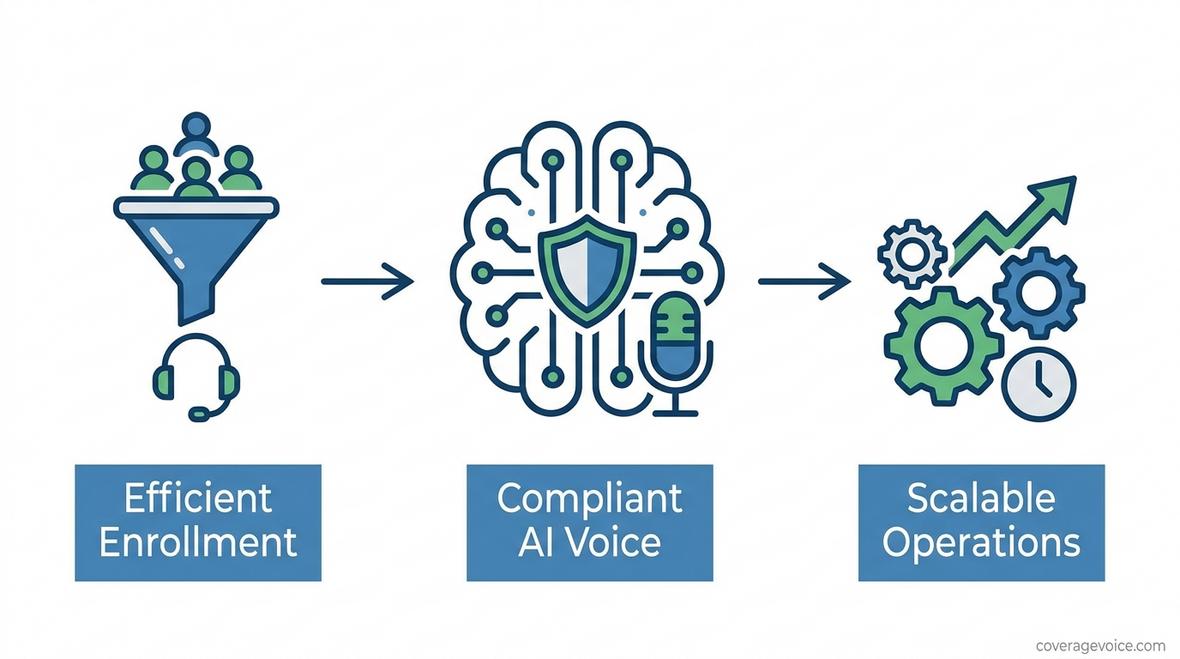
Organizations exploring a poly ai alternative typically cite several critical factors driving their search for specialized solutions tailored to Medicare operations.
Cost Structure and Implementation Expenses
Generic conversational AI platforms often carry enterprise-grade pricing models designed for large corporations with diverse use cases. For Medicare-focused organizations, this means paying for capabilities and features irrelevant to their operations while still requiring significant customization investment to address healthcare-specific needs.
The total cost of ownership extends beyond licensing fees. Implementation timelines for generic platforms in Medicare environments frequently exceed six to nine months, requiring dedicated development resources, extensive testing cycles, and ongoing maintenance. CoverageVoice offers transparent pricing models designed specifically for Medicare organizations, with implementation timelines measured in weeks rather than months.
Seasonal Scalability for AEP and OEP
The Annual Enrollment Period represents a unique challenge for Medicare organizations. Call volumes can increase 300-500% during the October through December timeframe, creating impossible staffing challenges. Generic AI platforms may offer scalability in theory, but lack the Medicare-specific conversation handling required during this critical period.
CoverageVoice was purpose-built to handle AEP and OEP automation, with conversation flows specifically designed for the high-volume, time-sensitive nature of enrollment periods. The platform seamlessly scales to handle surge capacity without the performance degradation or conversation quality issues that plague generic alternatives.
Integration with Medicare Technology Ecosystem
Medicare organizations rely on specialized technology stacks including CRM systems (Salesforce Health Cloud, ConnectureDRX, GoHighLevel), telephony platforms, enrollment systems, and compliance tracking tools. Generic conversational AI platforms require custom API development and middleware to integrate with these Medicare-specific systems.
As a dedicated Medicare voice AI solution, CoverageVoice maintains native integrations with the technology platforms Medicare organizations actually use, eliminating integration friction and accelerating time to value.
CoverageVoice Competitive Advantages as a Poly AI Alternative
When evaluating a poly ai alternative for Medicare operations, decision-makers should examine several critical differentiators that separate purpose-built healthcare solutions from generic conversational AI platforms.
Pre-Built Medicare Domain Intelligence
CoverageVoice arrives with comprehensive Medicare knowledge pre-configured into its conversation engine. The platform understands plan types (Medicare Advantage, Medicare Supplement, Part D), coverage nuances, eligibility criteria, enrollment windows, and the regulatory framework governing beneficiary communications. This embedded domain expertise means organizations can deploy effective automation in weeks rather than spending months training a generic platform.
Compliance-First Architecture
Rather than treating compliance as an add-on feature, CoverageVoice implements a compliance-first architectural approach. Every conversation automatically includes required disclosures, consent verification, and documentation trails. The platform maintains awareness of CMS marketing guidelines, TCPA requirements, and state-specific regulations, dynamically adapting conversations to ensure adherence.
Organizations seeking a poly ai alternative specifically for Medicare marketing compliance find CoverageVoice eliminates the compliance customization burden that generic platforms impose.
Proven Performance in Medicare Environments
CoverageVoice has demonstrated measurable impact in real Medicare operations. Case studies document organizations replacing 45 agents with voice AI, reducing call resolution times by 30x, and improving Medicare Star Ratings through enhanced member engagement.
These results reflect the platform's optimization for Medicare-specific metrics: enrollment conversion rates, member satisfaction scores, compliance adherence, and operational cost per enrollment. Generic conversational AI platforms measure success using retail and hospitality KPIs that don't translate to Medicare performance requirements.
Specific Use Cases Where CoverageVoice Excels
The true value of a specialized poly ai alternative becomes apparent when examining specific Medicare operational scenarios.
FMO and Broker Operations
Field Marketing Organizations and independent brokers face unique challenges: managing distributed agent networks, qualifying leads efficiently, and scaling operations during enrollment periods without proportional cost increases. CoverageVoice provides solutions specifically designed for Medicare brokers and FMOs, including intelligent lead qualification, automated appointment scheduling, and compliant follow-up sequences.
For brokers evaluating a poly ai alternative, CoverageVoice offers the Medicare expertise generic platforms lack, with conversation flows that understand lead sources, commission structures, and the broker-beneficiary relationship dynamics.
Health Plan Call Centers
Medicare Advantage and Part D plan sponsors operate call centers that must balance member service quality with operational efficiency while maintaining strict compliance standards. Generic conversational AI platforms struggle with the complexity of plan-specific formulary questions, coverage determinations, and appeals processes.
CoverageVoice transforms Medicare call center operations with AI agents capable of handling routine inquiries, benefit verifications, and member support tasks while seamlessly escalating complex issues to human agents. The platform integrates with plan systems to provide real-time, member-specific information during conversations.
Marketing Agency Lead Management
Marketing agencies serving Medicare clients need to demonstrate ROI through qualified lead delivery and conversion optimization. Generic AI platforms lack the Medicare lead qualification logic required to efficiently segment prospects and route them appropriately.
CoverageVoice offers specialized capabilities for marketing agencies, including PPC ad follow-up automation, lead reactivation campaigns, and intelligent pre-screening that maximizes the value of every lead generated.
After-Hours and Overflow Support
Medicare beneficiaries don't limit their questions to business hours, yet maintaining 24/7 staffing creates prohibitive cost burdens. CoverageVoice provides after-hours AI agent capabilities that ensure prospects and members receive immediate, compliant responses regardless of when they reach out.
This capability represents a significant advantage over Poly AI and other generic alternatives, which require extensive customization to handle Medicare-specific after-hours scenarios with appropriate compliance safeguards.
Implementation and Time-to-Value Comparison
When organizations evaluate a poly ai alternative, implementation complexity and time-to-value represent critical decision factors that often receive insufficient attention during vendor selection.
Deployment Timeline Differences
Generic conversational AI platforms typically require 6-12 month implementation cycles for Medicare applications. This timeline includes requirements gathering, custom development, training data preparation, integration work, compliance validation, and iterative testing. Organizations must dedicate internal resources throughout this extended process, delaying ROI realization and potentially missing critical enrollment periods.
CoverageVoice's Medicare-specific architecture enables deployment in 2-6 weeks for most use cases. Pre-built conversation flows, native integrations, and embedded compliance frameworks eliminate the customization burden that extends generic platform implementations. Organizations can deploy automation before AEP rather than hoping to complete implementation by the following year.
Internal Resource Requirements
Implementing Poly AI or similar generic platforms for Medicare use cases requires dedicated technical resources: developers to build custom integrations, data scientists to train conversation models, compliance specialists to validate regulatory adherence, and project managers to coordinate cross-functional efforts. Smaller Medicare organizations often lack these specialized resources entirely.
CoverageVoice minimizes internal resource requirements through turnkey deployment models, managed implementation services, and purpose-built Medicare capabilities that eliminate custom development needs. Organizations can deploy sophisticated voice AI automation without building internal AI expertise or dedicating scarce technical resources to lengthy implementation projects.
Total Cost of Ownership Analysis
Understanding the true cost difference between CoverageVoice and generic conversational AI alternatives requires examining total cost of ownership across the solution lifecycle.
Licensing and Platform Costs
Generic enterprise conversational AI platforms typically price based on conversation volume, API calls, or concurrent sessions using models designed for large enterprises with diverse use cases. Medicare organizations pay for capabilities they don't need while still requiring additional investment to address healthcare-specific requirements.
CoverageVoice offers pricing models aligned with Medicare business metrics: cost per enrollment, per member per month, or per qualified lead. This alignment ensures organizations pay for business outcomes rather than technical metrics, with transparent pricing that facilitates accurate ROI projections.
Implementation and Customization Costs
The hidden costs of generic platforms emerge during implementation. Custom development, integration work, and compliance configuration can easily exceed initial platform licensing costs. Organizations frequently underestimate these expenses, discovering mid-implementation that their budget assumptions were unrealistic.
Medicare-specific platforms like CoverageVoice include the compliance frameworks, conversation flows, and integrations required for Medicare operations in their core offering, dramatically reducing or eliminating customization expenses.
Ongoing Maintenance and Update Costs
CMS regulations, compliance requirements, and Medicare program rules evolve continuously. Generic platforms place the burden of maintaining compliance currency on the customer, requiring ongoing development investment to keep pace with regulatory changes.
As a specialized Medicare platform, CoverageVoice maintains compliance with evolving CMS requirements as part of its core product development, automatically updating conversation flows and compliance safeguards to reflect current regulations. This managed approach eliminates ongoing compliance maintenance costs that generic platforms impose on customers.
Feature Comparison: CoverageVoice vs Generic Conversational AI
| Capability | CoverageVoice | Generic Conversational AI (Poly AI, etc.) |
|---|---|---|
| HIPAA Compliance (Built-in) | Native architecture | Requires custom configuration |
| CMS Marketing Compliance | Automated, continuously updated | Custom development required |
| Medicare Domain Knowledge | Pre-configured | Requires extensive training |
| AEP/OEP Optimization | Purpose-built workflows | Custom development needed |
| Medicare CRM Integration | Native connectors | Custom API development |
| Implementation Timeline | 2-6 weeks typical | 6-12 months typical |
| Pricing Model | Medicare business metrics | Generic conversation volume |
| Compliance Updates | Automatic, included | Customer responsibility |
| Medicare-Specific Support | Expert team | General technical support |
Real-World Results: CoverageVoice Customer Success
The performance difference between purpose-built Medicare solutions and generic conversational AI platforms becomes clear when examining actual deployment results.
Enrollment Efficiency and Cost Reduction
Medicare organizations implementing CoverageVoice consistently report dramatic operational improvements. One FMO documented replacing the equivalent of 45 full-time agents with voice AI automation, reducing cost per enrollment by 67% while maintaining compliance standards and improving member satisfaction scores.
These results reflect CoverageVoice's optimization for Medicare enrollment workflows, with conversation intelligence specifically designed to guide beneficiaries through plan selection, eligibility verification, and enrollment completion. Generic platforms lack this specialized optimization, requiring extensive customization to achieve comparable results.
Compliance Performance and Audit Readiness
CMS audits and compliance reviews represent significant operational risks for Medicare organizations. CoverageVoice customers report simplified audit preparation and improved compliance performance due to the platform's comprehensive documentation, automated consent management, and built-in regulatory adherence.
Organizations using generic conversational AI platforms for Medicare applications often discover compliance gaps during audits, requiring remediation efforts and exposing the organization to regulatory risk. The compliance-first architecture of specialized alternatives eliminates these vulnerabilities.
Decision Framework: Selecting the Right Poly AI Alternative
Medicare organizations evaluating conversational AI platforms should apply a structured decision framework that prioritizes healthcare-specific requirements over generic capabilities.
Regulatory and Compliance Requirements
Begin by cataloging specific compliance requirements: HIPAA privacy and security rules, CMS marketing and communication guidelines, TCPA consent requirements, and state-specific regulations. Evaluate whether candidate platforms address these requirements natively or require custom development. Platforms requiring extensive compliance customization introduce implementation delays, ongoing maintenance burdens, and regulatory risk.
Medicare Domain Expertise and Workflow Alignment
Assess whether the platform understands Medicare-specific concepts, workflows, and communication requirements. Can it handle plan comparisons, formulary questions, eligibility scenarios, and enrollment processes without extensive training? Purpose-built Medicare platforms like CoverageVoice deliver immediate value, while generic alternatives require months of domain knowledge development.
Integration Ecosystem and Technical Architecture
Document your existing technology stack and evaluate integration requirements. Medicare organizations typically use specialized systems that generic platforms don't support natively. The integration effort required to connect conversational AI with your CRM, telephony, and enrollment systems directly impacts implementation timeline and total cost of ownership.
Scalability for Seasonal Demand Patterns
Medicare's seasonal enrollment periods create unique scalability requirements. Evaluate whether candidate platforms can handle 3-5x volume increases during AEP without performance degradation or conversation quality issues. Platforms optimized for steady-state operations may struggle with Medicare's cyclical demand patterns.
Migration from Existing Solutions
Organizations currently using Poly AI or other generic conversational AI platforms for Medicare applications may consider migration to specialized alternatives as they encounter limitations, compliance challenges, or cost concerns.
Migration Planning and Risk Mitigation
Platform migration requires careful planning to avoid operational disruption. CoverageVoice provides migration assistance including conversation flow analysis, data transfer support, and phased deployment models that minimize risk. Organizations can typically complete migration during low-volume periods between enrollment seasons, ensuring continuity of operations.
Data Portability and Historical Preservation
Comprehensive conversation histories, member interaction records, and compliance documentation must transfer to new platforms. CoverageVoice supports standard data formats and provides migration tools that preserve historical information while transitioning to the new platform architecture.
Future-Proofing Your Voice AI Investment
The conversational AI landscape continues evolving rapidly, with new capabilities emerging regularly. Organizations selecting a poly ai alternative should evaluate platforms based on their commitment to Medicare-specific innovation and their track record of continuous improvement.
Medicare-Specific Platform Evolution
CoverageVoice maintains a product roadmap driven by Medicare industry needs rather than generic conversational AI trends. The platform continuously adds capabilities addressing emerging Medicare challenges: enhanced Star Ratings support, improved dual-eligible outreach, advanced retention analytics, and evolving compliance requirements.
Generic platforms evolve based on broader market demands, potentially neglecting Medicare-specific needs or requiring custom development to adopt new capabilities for healthcare applications.
Regulatory Change Adaptation
CMS regularly updates Medicare program rules, marketing guidelines, and compliance requirements. Specialized Medicare platforms maintain dedicated compliance teams that monitor regulatory changes and update platform capabilities accordingly. This proactive approach ensures customers remain compliant as regulations evolve, without requiring internal resources to track changes and implement updates.
Frequently Asked Questions
What makes CoverageVoice different from Poly AI for Medicare organizations?
CoverageVoice is purpose-built exclusively for Medicare and healthcare insurance operations, with native HIPAA compliance, CMS marketing adherence, and pre-configured Medicare domain knowledge. Poly AI is a generic conversational AI platform requiring extensive customization to address Medicare-specific requirements, compliance frameworks, and specialized workflows.
How long does CoverageVoice implementation take compared to generic platforms?
CoverageVoice typically deploys in 2-6 weeks for most Medicare use cases, compared to 6-12 months for generic conversational AI platforms. The difference reflects CoverageVoice's pre-built Medicare conversation flows, native compliance frameworks, and purpose-built integrations that eliminate custom development requirements.
Can CoverageVoice handle AEP volume surges effectively?
Yes, CoverageVoice was specifically designed for Medicare's seasonal enrollment patterns, with architecture optimized for the 300-500% volume increases typical during AEP. The platform maintains conversation quality and compliance adherence during peak periods without the performance degradation that affects generic platforms.
What is the cost difference between CoverageVoice and Poly AI alternatives?
While platform licensing costs vary based on specific requirements, CoverageVoice typically delivers 40-60% lower total cost of ownership due to reduced implementation expenses, eliminated customization costs, and included compliance maintenance. Generic platforms impose significant hidden costs through custom development, integration work, and ongoing compliance updates.
Does CoverageVoice integrate with existing Medicare technology stacks?
Yes, CoverageVoice maintains native integrations with Medicare-specific CRM systems, telephony platforms, and enrollment tools commonly used by FMOs, health plans, and brokers. This eliminates the custom API development required when implementing generic conversational AI platforms in Medicare environments.
Conclusion
For Medicare organizations seeking a poly ai alternative, the decision extends far beyond comparing conversational AI capabilities. Success requires a platform purpose-built for Medicare's unique combination of regulatory complexity, seasonal demand patterns, and specialized workflows. CoverageVoice delivers the compliance-first architecture, Medicare domain expertise, and operational optimization that generic platforms cannot match without prohibitive customization investment. Organizations choosing specialized Medicare voice AI solutions gain faster implementation, lower total cost of ownership, reduced regulatory risk, and superior performance on the metrics that matter most: enrollment efficiency, member satisfaction, and compliant growth. To explore how CoverageVoice can transform your Medicare operations, visit coveragevoice.com and discover why leading FMOs, health plans, and brokers choose purpose-built Medicare automation over generic alternatives.
Ready to Transform Your Medicare Enrollment Process?
See how Coverage Voice AI can help you automate Medicare enrollment.