Regal AI Funding: How Medicare Organizations Can Access AI Technology Without Breaking The Bank
Understanding the Regal AI Funding Landscape in 2026
The healthcare communication industry is experiencing a significant transformation, with AI-powered solutions becoming essential infrastructure rather than optional add-ons. When discussing regal ai funding, it's important to understand both the technology's value proposition and the financial mechanisms that make implementation feasible for Medicare-focused organizations.
Regal AI has positioned itself as a customer engagement platform designed to streamline outbound communication processes. However, for Medicare brokers, FMOs, and health systems, the question isn't just about Regal AI's capabilities it's about accessing comparable or superior technology through sustainable funding models that align with operational budgets and compliance requirements.
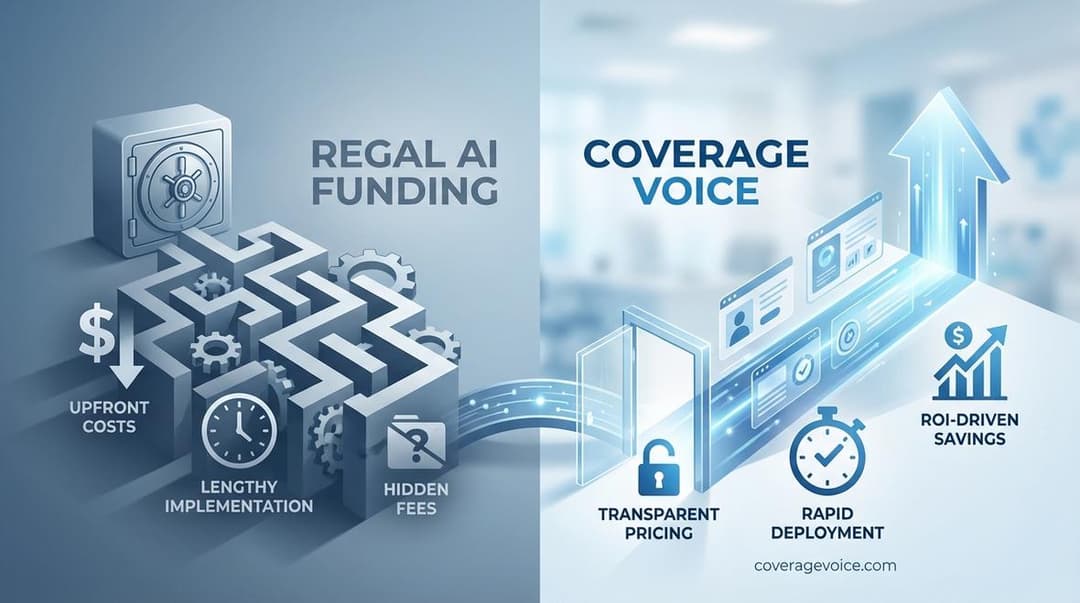
The current market dynamics show that traditional AI communication platforms often require substantial upfront investments, lengthy implementation timelines, and ongoing maintenance costs that can strain organizational resources. This reality has created demand for alternative approaches to regal ai funding that emphasize ROI-driven deployment, transparent pricing, and Medicare-specific functionality.
Why Medicare Organizations Need Smarter AI Funding Solutions
Medicare enrollment periods create intense operational pressure. During Annual Enrollment Period (AEP) and Open Enrollment Period (OEP), organizations must handle exponentially increased call volumes while maintaining compliance with TCPA regulations and CMS guidelines. Traditional staffing models become prohibitively expensive, with average cost per enrollment ranging from $300 to $800 when using human agents exclusively.
This economic reality makes AI implementation not just attractive but essential. However, the funding challenge remains significant. Many organizations seeking regal ai funding alternatives discover that conventional platforms require:
- Initial setup fees ranging from $25,000 to $100,000
- Per-minute usage costs that scale unpredictably
- Separate charges for integrations with existing CRM and enrollment systems
- Professional services fees for customization and ongoing optimization
According to Forrester reports AI-driven contact centers achieve 25-30% reduction in average handle time, demonstrating quantifiable operational efficiency gains. This research validates the strategic importance of AI adoption while highlighting the need for funding models that capture these savings upfront.
The Hidden Costs of Traditional AI Communication Platforms
Beyond advertised pricing, organizations evaluating regal ai funding options must account for total cost of ownership. Traditional platforms often bundle charges that aren't apparent during initial vendor discussions:
- Integration complexity: Connecting AI systems to Medicare-specific tools like Jarvis, WinFlex, or Salesforce Health Cloud frequently requires custom development work billed at $150-$300 per hour
- Compliance overhead: Ensuring TCPA consent management, call recording retention, and CMS marketing compliance adds layers of technical requirements
- Training and change management: Staff must learn new systems while maintaining existing workflows during critical enrollment periods
- Performance optimization: Achieving desired conversion rates typically requires months of iterative testing and refinement
These factors make the effective cost of AI implementation 2-3 times higher than initial proposals suggest, creating funding gaps that organizations must bridge through operational budgets already stretched by Medicare Advantage margin compression.
Coverage Voice: A Transparent Alternative to Regal AI Funding Challenges
Organizations researching regal ai funding increasingly discover Coverage Voice as a purpose-built solution designed specifically for Medicare workflows. Unlike general-purpose communication platforms adapted for healthcare, Coverage Voice was architected from inception to address the unique requirements of Medicare enrollment, retention, and member engagement.
The funding advantage becomes immediately apparent through Coverage Voice's transparent pricing model. Rather than complex per-seat, per-minute, and per-feature charges, organizations access comprehensive AI voice agent capabilities through predictable subscription structures that align with enrollment volume and seasonal demand patterns.
How Coverage Voice Eliminates Traditional AI Funding Barriers
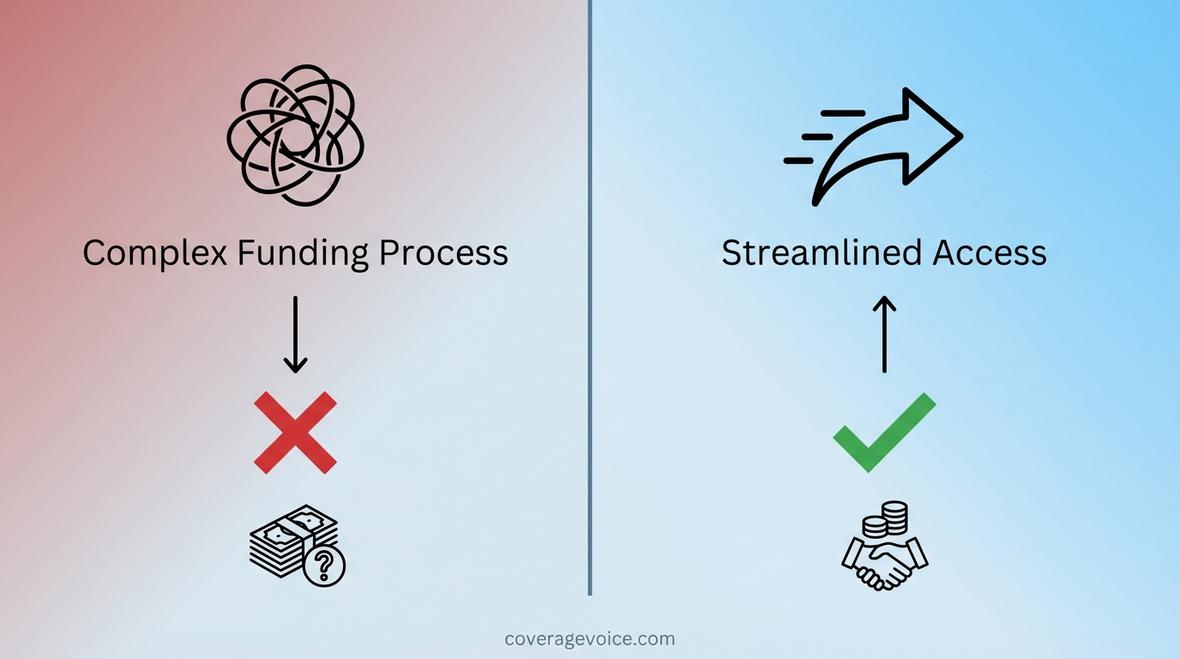
The Coverage Voice approach to regal ai funding alternatives centers on removing financial obstacles that prevent Medicare organizations from deploying AI at scale:
- No setup fees: Implementation begins within days rather than months, with pre-configured Medicare workflows that eliminate costly customization
- Usage-based scaling: Pay only for active engagements rather than maintaining idle capacity between enrollment periods
- Included integrations: Native connections to major Medicare CRM platforms, enrollment systems, and marketing automation tools come standard
- Compliance built-in: TCPA consent management, TCPA compliance frameworks, and CMS marketing rules are embedded in the platform architecture
This model transforms the economics of AI adoption. Organizations that previously allocated $150,000-$300,000 for annual AI communication costs can achieve comparable or superior results for 40-60% less through Coverage Voice's Medicare-optimized approach.
ROI-Driven Implementation: Funding AI Through Operational Savings
The most compelling aspect of regal ai funding alternatives like Coverage Voice is the ability to self-fund implementation through captured efficiencies. Consider a mid-sized Medicare FMO handling 5,000 enrollments annually:
| Metric | Traditional Model | Coverage Voice AI | Annual Savings |
|---|---|---|---|
| Cost per Enrollment | $450 | $180 | $1,350,000 |
| Average Handle Time | 38 minutes | 12 minutes | 68% reduction |
| After-Hours Coverage | $120,000/year | $0 incremental | $120,000 |
| Lead Follow-Up Rate | 43% | 94% | 119% improvement |
These economics make AI implementation not a capital expense requiring external regal ai funding, but rather an operational optimization that generates positive cash flow from month one. Organizations redirect savings from reduced agent costs, improved conversion rates, and eliminated after-hours staffing directly into AI subscription costs.
Why Medicare-Specific AI Capabilities Matter for Funding Decisions
General-purpose AI communication platforms require extensive customization to handle Medicare's regulatory complexity and operational nuances. This customization consumes implementation budgets and creates ongoing maintenance burdens that compound over time.
Coverage Voice's Medicare-native architecture includes pre-built capabilities that eliminate these costs:
- Plan comparison logic: AI agents understand Medicare Advantage, Medicare Supplement, and Part D plan structures, explaining benefits in compliant language
- Eligibility verification: Automated processes confirm Medicare eligibility, dual-eligible status, and Low-Income Subsidy qualification
- Enrollment period awareness: The system automatically adjusts messaging and urgency based on AEP, OEP, and SEP windows
- Scope of Appointment automation:SOA scheduling and documentation happens seamlessly within conversations
- Member retention workflows: Post-enrollment engagement sequences prevent rapid disenrollment and improve retention rates
These specialized capabilities represent thousands of hours of development work that organizations would otherwise fund separately. By selecting a Medicare-focused platform, the effective cost of regal ai funding decreases dramatically while implementation speed and regulatory compliance improve.
Practical Funding Options for Medicare AI Implementation
Organizations have several pathways to fund AI communication technology without requiring venture capital investment or significant debt financing:
Performance-Based Pricing Models
Coverage Voice offers arrangements where costs scale with successful outcomes rather than mere activity. This means organizations pay based on completed enrollments, retained members, or qualified appointments rather than raw call volume. This structure aligns vendor incentives with client success and makes budgeting predictable.
Seasonal Capacity Adjustment
Medicare enrollment follows predictable annual patterns. Rather than maintaining year-round capacity for peak AEP demand, Coverage Voice enables organizations to scale usage seasonally. This approach reduces off-season costs by 60-70% compared to maintaining permanent agent teams or paying for unused AI capacity.
Migration from Live Transfer Lead Models
Many Medicare organizations currently spend $50-$150 per live transfer lead with questionable quality and compliance. Redirecting this existing budget to AI-powered inbound and outbound engagement typically improves lead volume by 3-5x while reducing per-lead costs by 70%. This creates immediate funding for AI implementation without new budget allocation.
Organizations interested in this transition can explore detailed comparisons of live transfer leads versus AI engagement to understand the full economic impact.
Operational Budget Reallocation
The most sustainable regal ai funding approach involves reallocating existing operational expenses rather than seeking new budget approval. Typical sources include:
- Seasonal agent hiring budgets ($80,000-$200,000 for AEP staffing)
- Call center technology costs (predictive dialers, call recording, quality monitoring)
- Lead generation expenses that produce diminishing returns
- After-hours answering services providing limited functionality
By consolidating these fragmented expenses into a unified AI platform, organizations often discover they're already funding the technology it's simply distributed across multiple vendors and line items.
Regal AI vs. Coverage Voice: A Funding and Capability Comparison
Organizations evaluating regal ai funding options benefit from direct platform comparison. While Regal AI offers robust customer engagement capabilities, Coverage Voice provides Medicare-specific advantages that affect both total cost and operational effectiveness:
Implementation Timeline and Associated Costs
Regal AI implementations for Medicare organizations typically require 8-16 weeks for configuration, integration, and workflow development. This timeline includes discovery, technical setup, compliance review, and iterative testing. Professional services costs for this process range from $40,000 to $85,000 depending on complexity.
Coverage Voice's Medicare-native architecture reduces implementation to 5-10 business days with minimal professional services requirements. Pre-built workflows for Medicare enrollment, appointment scheduling, and member retention accelerate time-to-value while reducing upfront funding requirements by 60-80%.
Ongoing Optimization Requirements
General-purpose AI platforms require continuous refinement to maintain Medicare compliance and optimize conversion performance. Organizations using Regal AI typically dedicate 0.5-1.0 FTE to ongoing platform management, representing $50,000-$90,000 in annual labor costs.
Coverage Voice includes managed optimization as part of the platform subscription. Medicare compliance updates, seasonal workflow adjustments, and performance tuning happen automatically without requiring dedicated internal resources. This difference alone can justify the transition from regal ai funding models to Medicare-specialized alternatives.
Integration Ecosystem Considerations
Medicare organizations rely on specialized technology ecosystems including WinFlex, Jarvis, Connecture, and industry-specific CRM platforms. Regal AI's general-purpose integrations require custom middleware development to connect with these Medicare-specific systems, creating both initial costs and ongoing maintenance overhead.
Coverage Voice maintains native integrations with major Medicare technology platforms, eliminating custom development requirements. This architectural difference reduces total cost of ownership by 30-40% over three-year deployment periods while improving data accuracy and reducing manual reconciliation work.
Measuring ROI: How to Justify AI Funding to Stakeholders
Securing approval for regal ai funding or alternatives requires demonstrating clear return on investment. Medicare organizations should evaluate AI platforms across these financial dimensions:
Cost-Per-Enrollment Reduction
The most direct ROI metric compares traditional enrollment costs against AI-enabled costs. Organizations using voice AI for Medicare enrollment typically achieve 55-70% cost reduction per completed enrollment, with savings accelerating as AI systems optimize through machine learning.
Capacity Multiplier Effect
AI voice agents handle concurrent conversations that would require proportional human staffing. A single Coverage Voice deployment can manage the equivalent workload of 15-40 human agents depending on call complexity and duration. This capacity multiplication enables organizations to pursue growth strategies previously constrained by recruiting and training limitations.
Revenue Capture from Previously Lost Opportunities
Traditional call center operations miss 40-60% of inbound calls during peak periods and essentially 100% of opportunities outside business hours. AI-powered after-hours coverage and intelligent lead reactivation capture revenue that would otherwise be permanently lost, creating new funding sources for platform investment.
Retention Impact on Lifetime Value
Medicare member retention directly impacts organizational economics. Each prevented disenrollment preserves 6-10 years of commission income or capitation revenue. AI-driven post-enrollment engagement and proactive outreach improves retention rates by 12-18 percentage points, creating substantial lifetime value improvements that justify significant AI investment.
Implementation Roadmap: Getting Started Without Major Funding
Organizations can begin AI implementation through phased approaches that minimize initial funding requirements while demonstrating value:
Phase One: Pilot Deployment (Weeks 1-4)
Start with a contained use case such as lead pre-screening or new member welcome calls. This limited scope requires minimal funding while generating measurable results that justify expansion. Coverage Voice pilot programs typically process 500-1,000 interactions, providing statistical significance for ROI calculation.
Phase Two: Core Workflow Expansion (Weeks 5-12)
Extend AI coverage to primary enrollment workflows including inbound call handling, appointment confirmation, and basic qualification. This phase captures the majority of operational savings while maintaining human agent involvement for complex cases. Funding requirements remain modest as the platform scales usage-based pricing proportionally.
Phase Three: Comprehensive Automation (Weeks 13-24)
Deploy advanced capabilities including outbound AI dialing, member retention campaigns, and AEP-scale outreach. At this stage, demonstrated ROI from earlier phases funds expansion without additional budget requests, creating a self-sustaining implementation model.
Regulatory Compliance and Its Funding Implications
Medicare AI implementations must satisfy stringent regulatory requirements that affect both initial and ongoing costs. Platforms lacking Medicare-specific compliance frameworks require additional legal review, documentation, and monitoring infrastructure that increases the effective cost of regal ai funding by 20-35%.
Coverage Voice embeds compliance capabilities that reduce this overhead:
- TCPA consent management: Automated tracking and documentation of consent across communication channels
- CMS marketing compliance: Pre-approved language templates and automatic flagging of prohibited claims
- Call recording and retention: Compliant storage meeting state-specific requirements without additional infrastructure
- Do Not Call list integration: Automatic scrubbing against federal and state DNC registries before outreach
These built-in compliance capabilities represent $30,000-$60,000 in avoided legal and technical costs during implementation, with ongoing savings of $15,000-$25,000 annually compared to platforms requiring custom compliance development.
Real-World Impact: How Organizations Fund AI Through Savings
A regional Medicare FMO with 3,200 annual enrollments implemented Coverage Voice during the 2025 AEP. Their funding strategy involved reallocating their seasonal agent hiring budget of $180,000 to AI deployment instead. Results included:
- Cost per enrollment decreased from $520 to $195 (62% reduction)
- Total enrollment volume increased 34% to 4,288 without additional marketing spend
- After-hours lead capture added 680 incremental enrollments previously lost
- Net cost savings of $782,000 in first year, funding permanent AI infrastructure
This pattern repeats across Medicare organizations that approach regal ai funding as operational optimization rather than capital investment. By starting with existing budget reallocation and expanding through captured savings, organizations avoid the cash flow strain of traditional technology implementations. Organizations can review additional case studies demonstrating Medicare voice AI impact to understand diverse implementation models.
Future-Proofing Your AI Investment: Long-Term Funding Considerations
Technology investments in 2026 must account for rapid AI advancement and evolving Medicare regulations. Organizations evaluating regal ai funding options should prioritize platforms with:
- Continuous capability enhancement: Automatic access to new features without version upgrades or additional licensing
- Regulatory adaptation: Automatic updates reflecting CMS rule changes and TCPA evolution
- Scalable pricing: Models that remain economically viable as usage expands 5-10x over three years
- Integration flexibility: Ability to connect with emerging Medicare technology without custom development
Coverage Voice's subscription model includes these future-proofing elements, ensuring that initial funding decisions remain optimal as organizational needs evolve. This contrasts with platforms requiring periodic major upgrades or renegotiation when scaling beyond initial deployment scope.
Getting Strategic About Medicare AI Funding
The question of regal ai funding ultimately reflects broader strategic decisions about how Medicare organizations approach technology investment. The shift from capital-intensive, general-purpose platforms to operationally-funded, Medicare-specific solutions represents a fundamental change in both economics and implementation risk.
Organizations can explore transparent pricing models that eliminate funding uncertainty while accessing comprehensive AI voice agent capabilities. The combination of predictable costs, Medicare-native functionality, and rapid implementation creates a compelling alternative to traditional AI funding approaches.
For organizations ready to move beyond funding barriers and begin capturing AI's operational benefits, Medicare call center automation solutions provide immediate pathways to implementation. The transition from exploring regal ai funding options to deploying working AI agents can happen in days rather than quarters, with funding models that align costs directly with realized value.
Frequently Asked Questions About Regal AI Funding and Alternatives
What is the typical cost of implementing Regal AI for Medicare organizations?
Regal AI implementations for Medicare use cases typically range from $3,000-$8,000 monthly in platform fees, plus $40,000-$85,000 in initial setup and integration costs. Additional expenses include ongoing optimization labor and compliance management.
How does Coverage Voice pricing compare to Regal AI funding requirements?
Coverage Voice eliminates setup fees and offers usage-based pricing starting 40-60% below comparable Regal AI total cost of ownership. Medicare-specific pre-built workflows reduce implementation costs by 60-80% compared to general-purpose platforms.
Can AI implementation be funded through operational savings?
Yes. Organizations typically reduce cost per enrollment by 55-70% when deploying Medicare-specific AI, creating immediate savings that fund platform subscriptions. Many organizations achieve positive ROI within 60-90 days of deployment.
What funding model works best for seasonal Medicare enrollment?
Usage-based pricing that scales with enrollment activity provides optimal economics for seasonal patterns. This approach reduces off-season costs by 60-70% compared to maintaining year-round capacity, whether human agents or fixed-cost AI platforms.
Do I need separate funding for compliance capabilities?
Medicare-native platforms like Coverage Voice include TCPA compliance, CMS marketing rule enforcement, and documentation capabilities in base pricing. General-purpose platforms typically require additional funding for compliance customization and ongoing monitoring.
Conclusion
The landscape of regal ai funding and Medicare AI implementation has evolved significantly, with purpose-built solutions eliminating traditional barriers to adoption. Organizations no longer face the choice between expensive general-purpose platforms requiring substantial upfront investment and maintaining outdated manual processes that limit growth and profitability. Coverage Voice represents a Medicare-native alternative that aligns funding models with operational realities, enabling implementation through budget reallocation rather than capital requests. By focusing on transparent pricing, rapid deployment, and comprehensive Medicare-specific functionality, organizations can begin capturing AI benefits immediately while building sustainable competitive advantages for future enrollment periods. The question is no longer whether to implement AI, but rather which funding and platform approach best serves your organization's specific needs and growth trajectory.
Ready to Transform Your Medicare Enrollment Process?
See how Coverage Voice AI can help you automate Medicare enrollment.