Voice Care AI: Complete Guide To Transforming Medicare Member Engagement In 2026

What is Voice Care AI and Why It Matters for Medicare Organizations
Voice care AI represents the convergence of conversational artificial intelligence and healthcare delivery, specifically designed to automate member interactions, streamline enrollment processes, and improve care coordination. For Medicare organizations, voice care ai solutions have become essential infrastructure for managing the increasing complexity of member communications while maintaining HIPAA and CMS compliance standards.
The Medicare ecosystem faces unique challenges that traditional call center models cannot efficiently address. With average call handling time in Medicare call centers exceeding 10 minutes during AEP, organizations are experiencing unprecedented operational strain. Voice care AI technology addresses these pain points by automating routine inquiries, qualification processes, and enrollment workflows without sacrificing the personalized experience members expect.
Medicare-focused voice care AI platforms differ significantly from generic chatbot solutions. They incorporate specialized knowledge of Medicare Advantage plans, Part D formularies, dual-eligible special needs plans (D-SNPs), and the nuanced regulatory framework governing member communications. This specialized approach ensures that automated interactions maintain accuracy while reducing compliance risk.
How Voice Care AI Technology Works in Medicare Operations
Understanding the technical architecture behind voice care AI helps Medicare organizations evaluate implementation strategies. Modern voice care ai systems integrate multiple components to deliver natural, compliant member interactions.
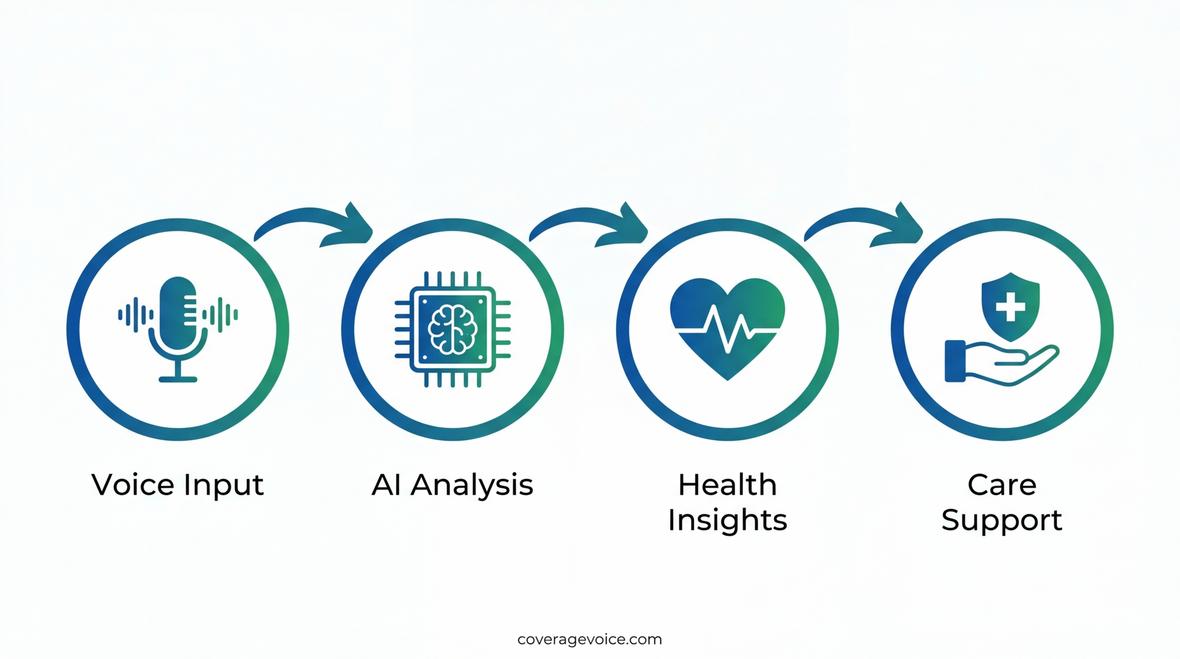
Voice Recognition and Natural Language Processing
The foundation of voice care AI begins with advanced speech recognition engines that convert spoken language into text with medical terminology accuracy exceeding 95%. These systems utilize deep learning models trained specifically on healthcare conversations, enabling them to understand regional accents, medical jargon, and the unique vocabulary of Medicare benefits discussions.
Natural language understanding (NLU) layers interpret member intent beyond simple keyword matching. When a member asks 'Do you cover my diabetes medication?', the system recognizes this as a formulary lookup request, identifies the therapeutic category, and initiates the appropriate verification workflow.
AI Analysis and Decision Logic
The core intelligence of voice care AI resides in decision engines that apply business rules, compliance guardrails, and conversational flow logic. For Medicare applications, these engines must navigate complex scenarios including Special Enrollment Period (SEP) verification, income-based subsidy determination, and plan comparison requirements mandated by CMS.
Machine learning models continuously improve response accuracy by analyzing successful enrollment patterns, identifying common member objections, and optimizing conversation paths. This adaptive capability allows Medicare call centers to maintain consistent quality even as plan benefits and regulations evolve.
Integration with Medicare Technology Stack
Effective voice care AI implementations require seamless integration with existing systems including customer relationship management (CRM) platforms, enrollment platforms, and carrier connectivity systems. Modern solutions utilize API-first architectures that connect with popular Medicare CRMs like Connecture, GoHealth, and SunFire while maintaining real-time data synchronization.
The integration capabilities extend to telephony infrastructure, enabling voice AI to function as an intelligent layer within existing contact center environments. This approach minimizes disruption while maximizing the value of existing technology investments.
Key Benefits of Voice Care AI for Medicare Organizations
Medicare organizations implementing voice care AI solutions report transformative operational improvements across multiple dimensions. Understanding these benefits helps stakeholders build compelling business cases for adoption.
Cost Reduction and Operational Efficiency
Traditional Medicare call centers operate with significant fixed costs including agent salaries, benefits, training, and infrastructure. Voice care AI dramatically reduces these expenses by automating routine interactions that comprise 60-70% of inbound call volume. Organizations can redeploy human agents to complex cases requiring empathy and nuanced judgment while AI handles verification, scheduling, and basic plan inquiries.
The financial impact becomes particularly pronounced during Annual Enrollment Period when call volumes surge 300-400% above baseline. Rather than hiring seasonal staff requiring weeks of training, AEP automation through voice AI scales instantly to meet demand without incremental per-interaction costs.
Enhanced Lead Conversion and Enrollment Rates
Speed-to-lead remains a critical success factor in Medicare marketing. Voice care AI enables immediate response to inbound inquiries, eliminating the lag time that causes prospect disengagement. Automated systems can contact leads within seconds of form submission, qualify prospects using intelligent screening, and schedule appointments with licensed agents for qualified opportunities.
Organizations implementing lead reactivation strategies through voice AI report 40-60% increases in conversion rates by systematically re-engaging prospects who previously showed interest but did not enroll. The persistent, non-intrusive nature of AI-powered follow-up overcomes the capacity limitations of human sales teams.
Compliance Assurance and Quality Consistency
Medicare marketing and enrollment activities face stringent regulatory oversight from CMS, requiring documented compliance with scope of appointment protocols, Telephonic Consumer Protection Act (TCPA) consent requirements, and accurate benefit representation. Voice care AI eliminates compliance variability by executing identical, pre-approved scripts across all interactions.
Every conversation generates detailed audit logs capturing timestamps, consent verification, disclosures provided, and member responses. This documentation provides invaluable protection during CMS audits and supports continuous quality improvement initiatives. Organizations can review 100% of AI interactions rather than the statistical sampling typically applied to human agent calls.
Superior Member Experience and Satisfaction
Contrary to common assumptions, Medicare beneficiaries respond positively to well-designed voice AI interactions. The key differentiators include natural conversation flow, immediate availability, and consistent courtesy. Voice care AI never experiences fatigue, frustration, or the pressure to rush calls during high-volume periods.
Advanced systems incorporate empathy modeling and sentiment detection, adjusting tone and pacing based on member emotional states. When members express confusion or frustration, the AI can seamlessly transfer to human agents with full context, ensuring continuity and preventing the need for members to repeat information.
Critical Use Cases for Voice Care AI in Medicare
Voice care AI delivers value across the complete Medicare member lifecycle, from initial prospect engagement through ongoing member retention. Understanding specific use cases helps organizations prioritize implementation phases.
Enrollment Process Automation
The enrollment workflow represents the highest-value application for voice care AI. Automated systems guide members through plan selection, capture required information, verify eligibility, and submit applications to carriers all within a single conversation. This enrollment automation reduces the typical 45-60 minute enrollment call to 15-20 minutes while improving data accuracy.
Voice AI excels at explaining complex benefit structures, comparing multiple plan options based on member preferences, and ensuring members understand their financial obligations. The technology presents information in digestible segments, confirms understanding, and adapts explanations based on member responses.
24/7 After-Hours Member Support
Medicare beneficiaries often need assistance outside traditional business hours, particularly when managing medication questions or understanding plan documents. Implementing after-hour AI agents ensures members receive immediate support regardless of time zone or day of week.
After-hours voice AI handles benefit verification, provider directory searches, pharmacy locator assistance, and appointment scheduling. For issues requiring human intervention, the system collects detailed information and creates prioritized tickets for next-business-day follow-up, ensuring no member inquiry goes unanswered.
Member Retention and Renewal Campaigns
Retaining existing members costs significantly less than acquiring new enrollments, making retention a strategic priority. Voice care AI enables proactive member retention outreach at scale, contacting members approaching renewal dates to confirm satisfaction, address concerns, and facilitate seamless re-enrollment.
Retention campaigns benefit from AI's ability to conduct thousands of simultaneous conversations, ensuring timely outreach across the entire member base. The system identifies at-risk members based on engagement patterns, service utilization, and expressed dissatisfaction, triggering specialized retention workflows before disenrollment occurs.
Dual-Eligible and LIS Outreach
Dual-eligible beneficiaries qualifying for both Medicare and Medicaid represent a complex enrollment category requiring specialized knowledge and persistent outreach. Voice AI optimized for dual-eligible and LIS outreach navigates the unique requirements of D-SNP enrollment, verifies Medicaid status, and explains the coordination of benefits between programs.
These campaigns often require multiple contact attempts before successful connection. AI-powered dialers systematically work through prospect lists, leaving voicemails when necessary and automatically scheduling callbacks based on member preferences, dramatically improving contact rates compared to manual dialing approaches.
Implementation Considerations for Medicare Voice Care AI
Successfully deploying voice care AI requires careful planning across technical, operational, and compliance dimensions. Organizations should approach implementation systematically to maximize return on investment.
Build vs. Buy Decision Framework
Medicare organizations face a fundamental choice between building custom voice AI solutions or adopting purpose-built platforms. The build approach offers maximum customization but requires substantial investment in AI talent, ongoing maintenance, and regulatory monitoring. Most organizations lack the specialized expertise needed to develop compliant, effective voice AI from scratch.
Adopting established platforms like CoverageVoice accelerates time-to-value by providing pre-built Medicare workflows, compliance frameworks, and carrier integrations. Purpose-built solutions incorporate years of domain expertise and continuous improvement based on aggregated performance data across multiple Medicare organizations.
Compliance and Security Requirements
Voice care AI handling protected health information must meet stringent HIPAA security standards including encryption at rest and in transit, access controls, audit logging, and business associate agreement execution. Additionally, Medicare-specific regulations require compliance with CMS marketing guidelines, TCPA consent requirements, and state insurance regulations.
Organizations should verify that voice AI vendors maintain SOC 2 Type II certification, HITRUST validation, and documented compliance programs addressing Medicare-specific requirements. The platform should provide configurable compliance controls enabling organizations to implement their specific interpretation of regulatory requirements.
Change Management and Agent Training
Introducing voice AI creates understandable anxiety among existing call center staff concerned about job displacement. Successful implementations frame AI as augmentation rather than replacement, emphasizing how automation of routine tasks enables agents to focus on complex, high-value interactions requiring human judgment.
Organizations should invest in training programs that help agents transition to supervisory roles overseeing AI performance, handling escalated cases, and providing the empathetic support that defines exceptional member experiences. This approach maintains institutional knowledge while improving job satisfaction through more engaging work.
Measuring Voice Care AI Success: Key Performance Indicators
Establishing clear metrics ensures voice AI implementations deliver expected value and enables continuous optimization. Medicare organizations should track both operational efficiency and member experience indicators.
Operational Efficiency Metrics
Core operational KPIs include automation rate (percentage of inquiries fully resolved by AI), average handling time, first-call resolution rate, and cost per interaction. Leading implementations achieve 70-80% automation rates for routine inquiries while reducing average handling time by 40-50% compared to human-only approaches.
Additional metrics include agent productivity (measured by complex cases resolved per agent), peak capacity management (ability to handle volume surges without service degradation), and system uptime/reliability. These indicators demonstrate the operational value delivered by voice care AI investments.
Member Experience and Satisfaction Metrics
Member-centric metrics include satisfaction scores, Net Promoter Score (NPS), complaint rates, and resolution accuracy. Organizations should compare these metrics between AI-handled and human-handled interactions to identify improvement opportunities and validate quality standards.
Behavioral indicators such as self-service adoption rates, repeat contact frequency, and channel preference shifts provide insight into member comfort with AI interactions. Increasing self-service adoption indicates successful AI implementation that members find valuable and easy to use.
The Future of Voice Care AI in Medicare
Voice care AI technology continues evolving rapidly, with emerging capabilities promising even greater value for Medicare organizations. Understanding these trends helps organizations plan long-term technology strategies.
Predictive Analytics and Hyper-Personalization
Next-generation voice care AI incorporates predictive modeling that anticipates member needs based on utilization patterns, demographic characteristics, and social determinants of health. These systems proactively initiate outreach for preventive care, medication adherence support, and care gap closure transitioning from reactive support to proactive health management.
Hyper-personalization engines customize communication style, channel preference, and content based on individual member preferences learned through interaction history. This approach maximizes engagement while respecting member autonomy and communication preferences.
Multimodal Experiences and Omnichannel Integration
Future voice care AI implementations will seamlessly blend voice, text, video, and in-person interactions within unified member journeys. Members might begin enrollment via voice AI, receive supplementary information via text, complete forms through a web portal, and finalize enrollment during a video consultation with a licensed agent all with perfect context continuity.
This omnichannel approach meets members in their preferred channels while maintaining the efficiency and compliance benefits of AI automation across all touchpoints.
Selecting the Right Voice Care AI Partner
The voice care AI vendor landscape includes general-purpose conversational AI platforms, healthcare-focused solutions, and Medicare-specific platforms. Medicare organizations should prioritize partners demonstrating deep domain expertise, proven compliance capabilities, and robust integration ecosystems.
Evaluation criteria should include Medicare-specific features (such as plan comparison engines, carrier connectivity, and CMS compliance frameworks), implementation support and training, ongoing optimization services, and transparent pricing models. Organizations should request detailed case studies demonstrating results in similar operational contexts and conduct thorough reference checks with existing clients.
Purpose-built platforms like CoverageVoice offer significant advantages through Medicare-focused development, pre-built workflows addressing common use cases, and continuous enhancement driven by aggregated performance data across the Medicare ecosystem. This specialization accelerates implementation and reduces the risk inherent in adapting general-purpose technologies to Medicare's unique requirements.
Frequently Asked Questions About Voice Care AI
What does voice care AI cost for Medicare organizations?
Voice care AI pricing typically follows per-interaction, per-minute, or subscription models. Costs range from $0.05-$0.25 per interaction for basic automation to $500-$5,000 monthly for comprehensive platforms with unlimited usage. Medicare-specific solutions often include setup fees covering workflow configuration, integration, and compliance customization. Total cost of ownership remains significantly lower than equivalent human agent capacity, with most organizations achieving ROI within 3-6 months of deployment.
Will voice care AI replace human Medicare agents?
Voice care AI augments rather than replaces human agents. The technology handles routine, repetitive inquiries enabling agents to focus on complex cases requiring empathy, judgment, and relationship building. Forward-thinking organizations redeploy agents into specialized roles including AI oversight, complex enrollment support, and member advocacy. This approach improves both operational efficiency and job satisfaction while maintaining the human touch essential for exceptional Medicare experiences.
How accurate is voice care AI for Medicare enrollment?
Modern voice care AI platforms achieve 95%+ accuracy in information capture and benefit explanation when properly configured with current plan data and compliance rules. Accuracy depends on training data quality, regular updates reflecting plan changes, and robust testing protocols. Leading implementations include validation checkpoints where members confirm critical information and human review workflows for high-stakes decisions. Organizations should establish accuracy benchmarks and conduct regular audits comparing AI performance to human agent standards.
How long does voice care AI implementation take?
Implementation timelines vary based on complexity, integration requirements, and customization needs. Basic deployments handling simple inquiries can launch within 4-6 weeks. Comprehensive implementations including carrier integrations, custom workflows, and extensive compliance customization typically require 8-12 weeks. Purpose-built Medicare platforms significantly reduce implementation time through pre-configured workflows and established integration patterns. Organizations should plan for additional time for agent training, quality assurance testing, and phased rollout strategies.
Conclusion
Voice care AI represents a transformative technology for Medicare organizations facing the dual pressures of increasing member expectations and operational cost constraints. By automating routine interactions while maintaining compliance and quality standards, voice care ai enables Medicare call centers, FMOs, and health plans to scale efficiently without sacrificing member experience. The technology delivers measurable benefits including reduced operational costs, improved conversion rates, enhanced compliance assurance, and superior member satisfaction. As voice AI capabilities continue advancing, Medicare organizations that establish strategic implementations today will build sustainable competitive advantages in member acquisition, engagement, and retention throughout the evolving healthcare landscape.
Ready to Transform Your Medicare Enrollment Process?
See how Coverage Voice AI can help you automate Medicare enrollment.